Witbier is Belgium’s classic wheat beer — a pale, hazy pour spiced with coriander and dried orange peel. Brewed with unmalted wheat alongside malted barley and fermented with a Belgian yeast strain, it typically comes in around 4.5–5.5% ABV. Light, cloudy, citrusy, and one of the most refreshing beer styles in the world.
Belgium’s brewing traditions run centuries deep, but witbier nearly didn’t survive long enough for most of us to drink it. By the 1950s, industrial lagers had pushed it off most tap lists, and the last commercial producer closed its doors in 1957. Then in 1966, a milkman named Pierre Celis in the small Belgian town of Hoegaarden decided to revive it — the same style his grandfather had brewed. He opened a brewery in a converted farmhouse, and the beer he made became the benchmark for the entire style. If you’ve had a Hoegaarden, you have him to thank.
American craft brewers picked up on witbier early. Allagash White, launched in Portland, Maine in 1995, became the definitive US example and helped introduce the style to a generation of drinkers who’d never set foot in Belgium. Today it’s one of the more approachable entry points into Belgian beer styles — easy enough for newcomers, interesting enough for beer nerds who know the history behind it.
How Is Witbier Made?
Witbier’s character comes from an unusual grain bill, distinctive spicing, and Belgian yeast working together. The grain is typically half malted barley and half unmalted wheat — it’s that unmalted wheat that gives witbier its characteristic haze and soft, slightly grainy mouthfeel. Some recipes also include a small amount of oats for added creaminess.
The spicing is what sets witbier apart from every other wheat beer style. Two additions are standard: ground coriander seed and dried Curaçao orange peel — the two ingredients that the BJCP’s witbier style guidelines identify as essential to the style. Traditionally, it’s bitter orange peel from the island of Curaçao, though most modern brewers use a mix of bitter and sweet peel. These aren’t meant to make the beer obviously “spiced.” Done right, you sense the coriander as a light floral note and the orange as a citrus lift without either one taking over the beer.
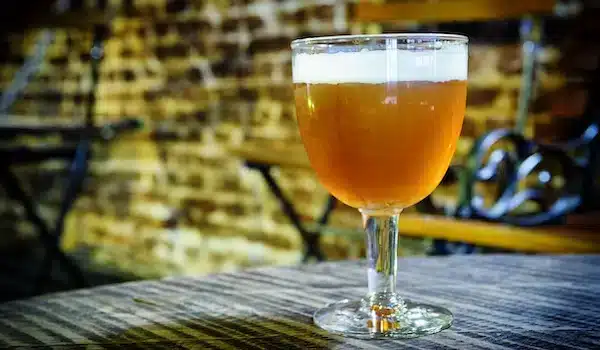
Fermentation uses a Belgian yeast strain that adds its own mild fruit and spice character on top of the added coriander and orange. The beer is packaged unfiltered — yeast and proteins stay in suspension, which is where the signature hazy, pale-white look comes from. The name “witbier” means “white beer” in Flemish Dutch, and that milky, opaque appearance in the glass is exactly what they were describing.
What Does Witbier Taste Like?
Brightness is the first thing you notice. Witbier is light-bodied, gently effervescent, and distinctly refreshing from the first sip. You’ll get citrus — mostly orange, sometimes a hint of lemon — sitting over a soft, bready wheat sweetness. Coriander comes through on the finish as a mild spice note, almost floral rather than peppery. Bitterness is minimal, and the finish is clean and dry.
The yeast adds a quiet, faintly tangy quality underneath everything — nothing as pronounced as the banana-and-clove you get from a hefeweizen, but it’s there if you’re paying attention. At 4.5–5.5% ABV, this is a beer you can drink several of on a warm afternoon without any regrets, which is exactly how Belgians have always approached it.
Witbier vs. Hefeweizen: What’s the Difference?
Both are wheat beers. Both are hazy. Both are light and refreshing at around 5% ABV. But they’re different styles from different countries, and once you’ve tasted them side by side, the differences are obvious.
Hefeweizen is defined by its Bavarian yeast, which produces intense banana and clove flavors that dominate the beer. Witbier’s yeast is more restrained — the defining character comes from the spice additions: coriander and orange peel. Hefeweizen has no added spices; witbier has no banana or clove. Tasted side by side, they taste nothing alike. Hefeweizen is warmer and richer; witbier is brighter, lighter, and more citrus-forward. Both are worth keeping in regular rotation.
If you’re also curious how witbier sits within the broader family of Belgian ales, the Belgian saison makes for an interesting comparison — it’s drier, more peppery, and higher in alcohol, but shares that same rustic, farmhouse character witbier is known for.
The Best Witbiers to Try
These are the ones worth tracking down — from the Belgian original to the best American examples.
Hoegaarden
This is the OG. Pierre Celis’s 1966 recipe, now brewed at the Hoegaarden brewery in Belgium, is still the benchmark for the style — 4.9% ABV, pale and milky in the glass, with soft orange and coriander over a wheaty base. It’s available almost everywhere, and it’s cheap. If you’ve never had a witbier, start here.
Allagash White
Allagash’s flagship, brewed in Portland, Maine since 1995, is the American standard for the style. It’s slightly more refined than Hoegaarden — a touch more citrus brightness, a cleaner finish — and has been winning over drinkers for three decades. At 5.1% ABV, it’s the one to reach for when you want the best American version of the style. Widely available at good bottle shops nationwide.
St. Bernardus Blanche
From the Belgian brewery better known for its Tripel and Quad, the Blanche is an underrated gem. At 5.6% ABV it’s slightly fuller than Hoegaarden, with a richer wheat body and a more pronounced coriander note on the finish. Harder to find in the US than Hoegaarden, but worth tracking down if your bottle shop stocks Belgian imports seriously.
Blue Moon Belgian White
Yes, it’s owned by Molson Coors. But Blue Moon is a legitimate witbier — recognizable orange and coriander character, 5.4% ABV, consistent, and available on draft at practically every bar in America. As a gateway to the style, it works perfectly. Order one if you want to understand what witbier tastes like before spending money on imports.
Celis White
After selling the Hoegaarden brewery to Interbrew, Pierre Celis moved to Austin, Texas, and started all over again. Today his original recipe is brewed by his daughter Christine at Celis Brewery in Austin. It’s 5% ABV, tastes strikingly close to the original Hoegaarden recipe, and carries a genuinely remarkable story behind it. If you’re in Texas, seek this one out.
Frequently Asked Questions (FAQ)
What does witbier mean?
Witbier means “white beer” in Flemish Dutch — the “wit” referring to the pale, hazy, almost white appearance in the glass. That haze comes from unfiltered yeast and wheat proteins left in suspension after brewing. It’s the same reason hefeweizen looks cloudy, though the two styles are completely different in character and origin.
Is witbier the same as hefeweizen?
No. Both are wheat beers, and both are hazy, but they’re different styles from different countries with entirely different flavor profiles. Hefeweizen is a German wheat beer defined by banana and clove from its Bavarian yeast. Witbier is Belgian, spiced with coriander and orange peel, and tastes nothing like hefeweizen once you know what you’re comparing. If you’ve tried one, you haven’t tasted the other.
Why is witbier cloudy?
Witbier is left unfiltered, which means yeast cells and wheat proteins remain in the beer after packaging. Those particles scatter light passing through the liquid, creating the characteristic hazy, pale-white look. It’s entirely intentional — the haze contributes to the soft mouthfeel that defines the style. A crystal-clear witbier would mean it’s been filtered, which somewhat defeats the point.
Does witbier always have coriander in it?
Traditional witbier always contains ground coriander seed and dried orange peel — these are the two signature spice additions that define the style. The amounts are intentionally subtle: the goal is background citrus and spice, not a beer that tastes like a spice rack. Some American craft interpretations vary the spice bill slightly, but coriander and orange peel remain the standard by which all witbiers are judged.
What food pairs well with witbier?
Witbier is one of the most food-friendly beers you can pour. Its citrusy brightness and low bitterness work particularly well with lighter dishes — steamed mussels, grilled shrimp, fish tacos, summer salads, and soft cheeses are all natural matches. The coriander note plays well with anything that has a citrus component, and the low ABV makes it a solid brunch beer. It’s also the obvious pairing for Belgian classics like moules frites.
Join the Craft Beer Me Community
If you’re working through Belgian beer styles and want more guides like this one, come join the Craft Beer Me Facebook group — it’s where beer nerds swap recommendations, share what’s in the glass, and geek out over everything from Belgian classics to the latest US craft releases. And sign up for the Craft Beer Me newsletter at the bottom of the page for style guides, brewery picks, and homebrewing tips straight to your inbox.