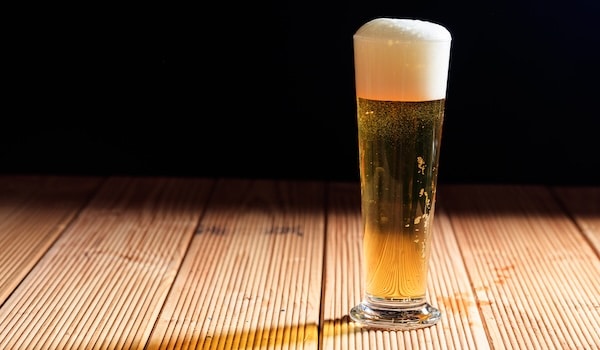
Kölsch is a crisp, pale golden German ale brewed exclusively in and around Cologne that’s fermented with ale yeast, then cold-conditioned like a lager for a clean, delicate finish. It’s light-bodied and subtly hoppy, with a gentle malt sweetness and just a trace of fruity ester character. ABV sits at 4.4–5.2%, and it’s served in small 200ml glasses designed to be finished quickly and refilled often.
Kölsch is one of the most unusual beers in the world. It’s technically an ale, but it drinks like a light lager. It’s brewed with centuries of tradition behind it, but it’s easy enough that total beginners love it. And it can only legally be called Kölsch if it’s brewed in Cologne — making it as geographically protected as Champagne or Roquefort. One sip and you understand the fuss.
If you want to brew your own, check out our Kölsch recipe guide — it’s more approachable than most German styles at home. But first, here’s what makes the real thing tick.
A Brief History of Kölsch
Cologne has been brewing top-fermented ales since the medieval period. For most of that history, the beers were darker and heavier than what we know today. The pale, delicate Kölsch as we know it emerged in the late 19th and early 20th centuries, shaped partly by the popularity of Czech Pilsner and partly by Cologne’s desire to have a distinctly local answer to it — lighter than Munich’s styles, but distinctly not a lager.
The name “Kölsch” — meaning “from Cologne” — has been in use for the beer since at least the 1800s. In 1986, the Kölsch Convention (Kölsch-Konvention) — explored in depth by VinePair — formalized what the name could legally apply to: pale, top-fermented, hop-accented, filtered, and brewed within a defined geographical area around Cologne. There are about 20 breweries that can produce the genuine article. Everyone else can make a “Kölsch-style” beer.
It’s worth noting the rivalry with Düsseldorf’s Altbier — dark, malty, and notably bitter — which exists just 45 kilometers up the Rhine. The two cities have been dismissing each other’s beer for generations. The full guide to German beer styles covers both, but picking a side is something you’ll have to figure out for yourself.
What Does Kölsch Taste Like?
Kölsch is one of the more deceptive beers in terms of complexity. It looks like a light lager and drinks almost as easy — but there’s a subtle elegance to it that’s hard to pin down and even harder to brew correctly. The malt character is light and slightly grainy, with a soft sweetness that never turns sugary. The hop bitterness is restrained, around 18–30 IBU, with noble German hops (usually Hallertau or Tettnang) contributing a gentle floral and herbal note.
The ale yeast leaves behind just a whisper of fruity esters — think a very faint hint of apple or pear — before the cold-conditioning smooths it back out. It’s crispy in the best sense. The carbonation is moderate, the finish is clean and dry, and before you know it the glass is empty and the Köbes (the waiter) is already placing a fresh one in front of you. That’s the Cologne tradition — they just keep bringing them until you put a coaster on top of the glass to signal you’re done.
- Color: Pale golden, brilliantly clear
- ABV: 4.4–5.2%
- IBU: 18–30
- Flavor: Delicate malt, light floral hops, trace fruity esters, dry finish
- Mouthfeel: Light to medium body, moderate-high carbonation
- Glassware: Stange (straight, narrow 200ml glass)
How Is Kölsch Made?
Kölsch sits in a unique category sometimes called a hybrid beer, or a warm/cold fermentation ale. Here’s the basic process: it’s fermented with a specific Kölsch ale yeast strain at relatively cool temperatures for an ale (around 57–65°F / 14–18°C), which suppresses some of the fruity ester production you’d get from a typical ale. Then it undergoes lagering — cold conditioning for several weeks at near-freezing temperatures — which further refines the flavor and produces the characteristic clarity. Most versions are also filtered to a brilliant, sparkling clear gold.
Pilsner malt is the foundation, with very small amounts of wheat malt sometimes added for body and head retention. Hops are mostly for bitterness — noble varieties at low to moderate additions. The yeast is doing the subtle work, and it’s a style where the slightest flaw shows up clearly. There’s nowhere to hide in a Kölsch, which is part of what makes brewing a great one genuinely difficult.
The Best Kölsch Beers to Try
For Cologne imports, look for these in specialty bottle shops and better beer bars. American craft interpretations are also plentiful and some of them are outstanding — Kölsch has become a go-to style for summer tap lists across the US.
- Reissdorf Kölsch — Widely considered the benchmark for the style. Clean, delicate, and perfectly balanced. If you can find it imported, start here. It sets the standard everything else gets measured against.
- Gaffel Kölsch — The best-selling Kölsch in Cologne, and the one most widely exported to the US. Slightly sweeter and rounder than Reissdorf, with a softer hop character. Very easy drinking.
- Früh Kölsch — Another Cologne classic, named after the pub it’s served at. Lightly hoppy with a clean, dry finish. A dependable, traditional version.
- Goose Island Summertime — Chicago’s Kölsch-style is one of the best American takes on the genre. Crisp, refreshing, light on its feet, and widely available as a summer seasonal. A great choice when German imports aren’t on hand.
- Odell Brewing Rupture — Fort Collins, Colorado. Slightly more hop-forward than a traditional Kölsch, but still in the spirit. Great for drinkers who want just a touch more character.
- Devils Backbone Kölsch — Virginia. One of the cleaner American interpretations, closer to the German original in delicacy. Worth seeking out if you’re on the East Coast.
Kölsch is one of the best beers for summer drinking — the combination of low ABV, high refreshment, and sessionable character makes it ideal for long, warm afternoons. It’s also a reliable crowd-pleaser for people who normally stick to macro lagers but are ready to try something with a bit more craft behind it.
Frequently Asked Questions (FAQ)
Is Kölsch a lager or an ale?
Kölsch is technically an ale — it’s brewed with top-fermenting ale yeast. But after primary fermentation, it’s cold-conditioned like a lager for several weeks, which gives it a clean, crisp, lager-like character. It’s often called a hybrid or warm/cold fermentation beer because of this dual process.
Why can only Cologne brew real Kölsch?
The Kölsch Convention of 1986 legally defined Kölsch as a beer brewed within the metropolitan area of Cologne, Germany. Like Champagne or Parmigiano-Reggiano, the name is geographically protected. Beers made outside Cologne using the same method must be labeled “Kölsch-style” — they cannot legally use the name “Kölsch.”
What is the Kölsch glass called?
The traditional Kölsch glass is called a Stange, meaning “rod” or “stick” in German. It’s a straight, narrow, cylindrical glass holding 200ml — much smaller than a standard pint. The small size is intentional: Kölsch is meant to be drunk fresh and cold, so you get a new one before the last one has time to warm up.
What does Kölsch taste like compared to other beers?
Kölsch is lighter and more delicate than almost any other craft style. It’s closer to a high-quality light lager than it is to a typical ale — very clean, with a subtle malt sweetness, low bitterness, and just a faint fruity note from the ale yeast. It’s a great choice for someone who finds most craft beers too intense but wants something with more character than a standard American lager.
Can I brew Kölsch at home?
Yes — and it’s one of the more rewarding styles to brew at home, though the lack of places to hide flaws makes clean brewing technique important. You’ll need a dedicated Kölsch yeast strain, temperature control during fermentation, and ideally the ability to cold-condition the beer for 2–4 weeks before drinking. Our Kölsch homebrew recipe walks through the full process.
Join the Craft Beer Me Community
Once you try a proper Kölsch — cold, fresh, in a Stange glass — you’ll get why Cologne refuses to brew anything else. Come join our Craft Beer Me Facebook group to swap notes on German styles with fellow beer nerds. And sign up for the Craft Beer Me newsletter at the bottom of the page for more style guides and seasonal picks.
Sign Up for Our Newsletter