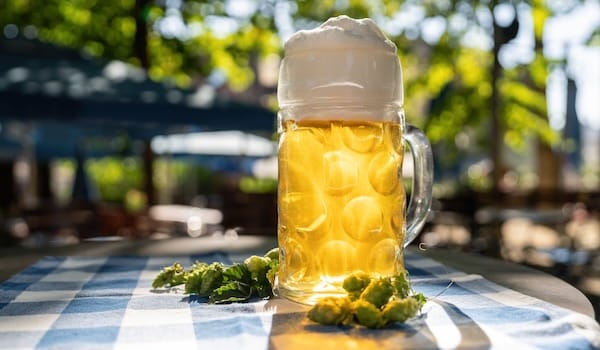
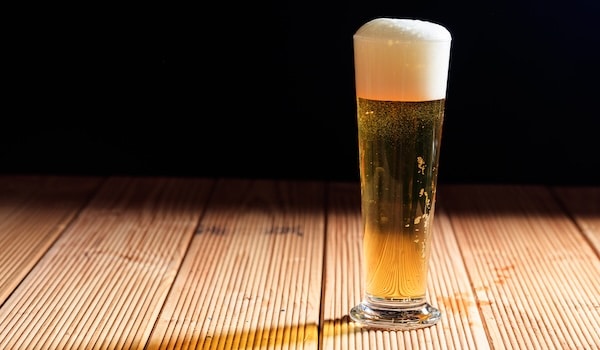
Märzen beer is a smooth, malt-forward amber lager brewed in spring and cold-lagered through summer before being unveiled at Oktoberfest in the fall. It pours a clear copper-amber color with rich toasty malt flavors, low bitterness, and a clean dry finish. ABV typically runs 5.8–6.3%.
Every September, Munich fills up with millions of visitors, enormous tents, and an ocean of beer. Oktoberfest is the world’s biggest beer festival — but for most of its history, there was really only one style of beer being served. That was Märzen. And if you’ve never had a real one, you’ve been missing what might be Germany’s most satisfying lager.
It’s a style that rewards a slow sip. The rich malt character, the clean dry finish, the way it somehow feels both substantial and refreshing at the same time — there’s a reason Bavarian brewers spent centuries perfecting this before anything else. Our German beer types guide covers the full lineup, but Märzen deserves a closer look on its own.
The History of Märzen and Oktoberfest
The name Märzen comes from März — German for March. Traditionally, Bavarian law prohibited brewing during the hot summer months to reduce the risk of spoilage and fire. So brewers would produce a large batch in March, store it in cold Alpine caves packed with ice through spring and summer, then bring it out in October when temperatures dropped again. The extended cold storage — what we now call lagering — produced a cleaner, smoother, more refined beer than anything brewed quickly in warmer months.
The first Oktoberfest was held in 1810, a wedding celebration for Crown Prince Ludwig of Bavaria and Princess Therese von Sachsen-Hildburghausen. Beer didn’t play a central role at first — it was horse racing and general festivities. Over the following decades the festival grew, and Märzen became the defining drink — a style the BJCP classifies as an Amber Malty European Lager with origins tied directly to the festival. The six traditional Munich breweries — Paulaner, Spaten, Hacker-Pschorr, Hofbräu, Löwenbräu, and Augustiner — are the only ones permitted to serve beer inside the official tents, and for most of the festival’s history, they were all serving Märzen.
One thing worth knowing: what gets served at modern Oktoberfest has actually changed. Since the 1990s, most of the big tents have switched to a lighter, golden lager called Festbier or Wiesn. It’s easier to drink in volume. But traditional Märzen is still brewed and celebrated — and many beer nerds would argue it’s the superior choice.
What Does Märzen Taste Like?
Märzen is fundamentally a malt-driven beer. Munich malt is the star of the show — it gives the beer its amber color and most of its flavor: think toasted bread, a hint of caramel, maybe a wisp of biscuit. The sweetness is real but it’s not cloying. Hop bitterness is low — enough to balance the malt and keep things dry, but not enough to interrupt the smooth ride. Most examples finish clean, almost snappy, which is exactly what makes a half-liter feel very manageable.
Carbonation is moderate. The body is medium — full enough to feel substantial, but not heavy. If you’ve ever written off amber beers as too sweet or too rich, give Märzen a try first. It’s proof that a malty lager can still be an effortless drinker. And if you want to understand how beer flavor actually works — malt sweetness, hop bitterness, fermentation character — Märzen is one of the clearest examples you’ll find.
- Color: Copper to amber
- ABV: 5.8–6.3%
- IBU: 18–24
- Flavor: Toasted bread, Munich malt sweetness, light caramel, clean finish
- Bitterness: Low — just enough to balance
- Mouthfeel: Medium body, moderate carbonation
Märzen vs Festbier: What’s the Difference?
This is the question that trips up a lot of people at Oktoberfest. Märzen and Festbier are not the same thing, even though “Festbier” is sometimes used loosely to mean any Oktoberfest-style beer.
Märzen is the traditional version — amber, malty, 5.8–6.3% ABV, the style that defined Oktoberfest for over a century. Festbier (or Wiesn) is the modern replacement that most of the large Munich tents now serve: lighter in color (pale golden), lighter in body, lower in ABV (usually 5.8–6.0%), and designed to be sessionable enough to keep a crowd of thousands happily drinking for hours. It’s fine beer, but it doesn’t have the same malt depth.
When you see “Oktoberfest beer” on a shelf in the US, it could be either. Traditional American craft interpretations tend to skew toward Märzen — the amber style. German imports labeled “Oktoberfest” from the big Munich breweries are increasingly the Festbier style. Read the label and look at the color.
The Best Märzen Beers to Try
The German imports are worth seeking out, especially in the lead-up to Oktoberfest season when they hit shelves. American craft breweries have also taken the style seriously — some US versions are excellent.
- Paulaner Oktoberfest Märzen — The benchmark. 5.8% ABV, copper-colored, with a clean malt sweetness and a finish that keeps you coming back. One of the most widely available German imports in the US.
- Ayinger Oktober Fest-Märzen — From a small family brewery south of Munich. Slightly richer than Paulaner, with a deeper amber color and more pronounced Munich malt character. If you can find it, grab it.
- Spaten Oktoberfest — Spaten is historically significant here — their brewmaster Josef Sedlmayr helped define the modern Märzen style in the 1800s. The beer reflects that heritage. Clean, malty, dry.
- Samuel Adams Oktoberfest — The most accessible US version. 5.3% ABV, amber, with a rounder malt profile than the German originals. A great entry point if imports aren’t easy to find near you.
- Great Lakes Brewing Oktoberfest — Cleveland’s seasonal Märzen is a genuine standout. 6.5% ABV, fuller-bodied, with deep caramel malt and a clean bitter finish. One of the best American takes on the style.
- Hacker-Pschorr Oktoberfest Märzen — Another Munich original. Rich, biscuity, and satisfying. If you’re going for an authentic Wiesn experience at home, this one delivers.
Worth noting: these are all seasonal releases. In the US, Märzen typically hits shelves in August and September. If you miss the window, you’ll be waiting another year. Stock up.
What Food Goes With Märzen?
Märzen is one of those beers that pairs almost effortlessly with food. The malt sweetness plays off savory, slightly fatty dishes, and the clean finish cuts through richness without fighting it.
- Pretzels and mustard — The classic for a reason. The salt brings out the malt, the bitterness of the mustard echoes the beer’s hop character.
- Bratwurst and grilled sausages — The smokiness and fat of grilled sausages are made for malty amber lagers.
- Roast chicken or pork — Caramelized roasted meat and Märzen’s Munich malt are natural partners.
- Mild hard cheese — Gouda, Emmental, or aged Swiss work well.
- Bread and butter — Don’t overcomplicate it. The toasty malt and fresh bread is a match that’s been working for centuries.
Frequently Asked Questions (FAQ)
What does Märzen mean in German?
Märzen means “March” in German. The name comes from the tradition of brewing this beer in March, before the summer heat made brewing impractical or risky, then storing it cold until October. The long, cold lagering period is what gives Märzen its clean, smooth character.
Is Märzen the same as Oktoberfest beer?
Märzen was the original Oktoberfest beer for most of the festival’s history, but the two terms aren’t exactly the same today. Many Munich breweries now serve a lighter golden lager called Festbier at the festival tents. Both styles get labeled “Oktoberfest beer” in the US, but Märzen is the amber, malt-forward traditional version.
What’s the difference between Märzen and a regular amber lager?
The key difference is in the ingredients and the process. Märzen is brewed with German Munich malt and noble hops like Hallertau or Tettnang, and it’s cold-lagered for an extended period — typically several months. That lagering time produces a smoother, cleaner beer than most amber lagers, which are often brewed and packaged faster.
Is Märzen beer a lager or ale?
Märzen is a lager. It’s fermented with bottom-fermenting lager yeast at cold temperatures, then lagered (stored cold) for an extended period before packaging. This process gives it the clean, crisp character that lagers are known for, combined with the rich malt depth that makes Märzen distinctive.
When is Märzen beer available?
Märzen is a seasonal release. German imports and American craft versions typically hit shelves in August and September, timed to coincide with Oktoberfest. Once the season ends, it disappears quickly. Some breweries release small quantities year-round, but if you want to try the classics, late summer and early fall is your window.
Join the Craft Beer Me Community
If Märzen has sent you down a German beer rabbit hole, you’re in good company. Come join our Craft Beer Me Facebook group — it’s where beer nerds share what’s in the glass, debate styles, and swap seasonal finds. Sign up for the Craft Beer Me newsletter at the bottom of the page and we’ll keep the style guides coming.
Sign Up for Our Newsletter