
Hoegaarden beer is the witbier that saved an entire style from extinction. Brewed in the Belgian town of Hoegaarden since 1966, it’s a pale, hazy wheat beer spiced with coriander and dried orange peel — 4.9% ABV, refreshingly light, and one of the most recognizable Belgian beers in the world. If you’ve ever had a witbier, you’ve almost certainly had this one.
The story behind it is one of craft beer’s better origin stories. By the mid-20th century, the witbier style had all but disappeared. Industrial lagers had taken over tap lists across Belgium, and the last witbier brewery in Hoegaarden had closed in 1957. The style seemed gone for good. Then Pierre Celis — a local milkman who remembered his neighbor brewing witbier as a child — decided he wasn’t ready to let it die. In 1966, he converted a farmhouse into a brewery and started making it again from old recipes. The beer he produced is essentially what you drink today.
Hoegaarden sits at the heart of Belgian brewing history in a way few beers do. It didn’t just survive — it sparked a global revival of the witbier style and directly inspired American craft brewers to create their own versions. Allagash White, Blue Moon, and dozens of other witbiers owe their existence to what Celis started in that Hoegaarden farmhouse.
What Does Hoegaarden Taste Like?
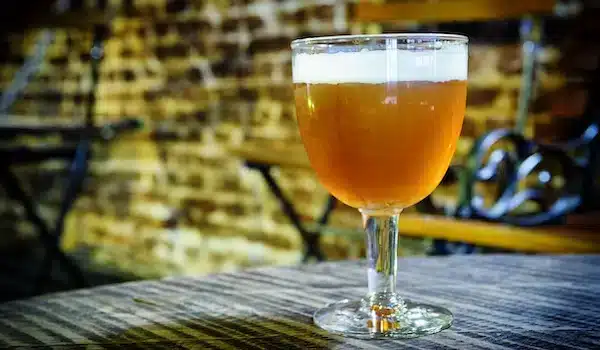
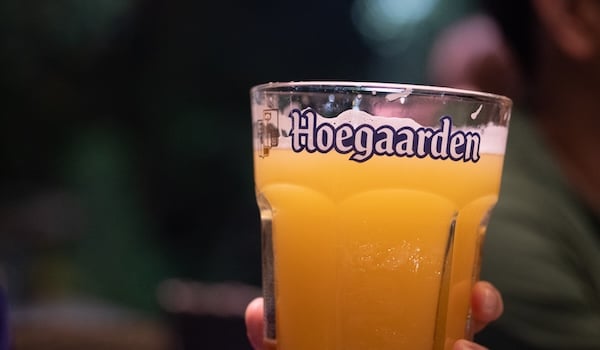
Pour a Hoegaarden, and it comes out pale and milky — a hazy white-gold that doesn’t clear even after settling. The head is thick and white. The first sip is light and refreshing with a gentle citrus note up front, followed by a soft wheat sweetness and a mild coriander spice on the finish. There’s a faint tanginess from the yeast that keeps it interesting without ever getting in the way.
What makes Hoegaarden work is its subtlety. The orange peel and coriander are there — you can taste both — but neither one dominates. It’s a genuinely balanced beer: citrusy without being sharp, spiced without being heavy, wheaty without being filling. Bitterness is minimal. The finish is clean and dry. At 4.9% ABV, it’s easy to drink several without noticing, which is partly what made it so popular when Celis brought it back.
How Is Hoegaarden Made?
Hoegaarden follows the traditional witbier recipe that defined the style for centuries. The grain bill is roughly 50% unmalted wheat and 50% malted barley — the unmalted wheat is what gives it the haze and soft mouthfeel. No adjuncts, no shortcuts. The two defining spice additions are dried Curaçao orange peel and ground coriander seed, added during the boil in quantities precise enough to be detectable but not obvious.
The fermentation process uses a proprietary Belgian yeast strain that contributes its own mild fruity and spice esters on top of the coriander and orange. After fermentation, the beer is packaged unfiltered — the yeast stays in suspension, which is why it pours hazy and why you’re supposed to gently swirl the bottle before pouring to rouse the sediment. Skip that step, and you’ll pour a clear half-glass followed by a cloudy slug of yeast at the end. Not ideal.
The Pierre Celis Story
Pierre Celis is one of the most important figures in modern craft beer history, and most people outside Belgium have never heard of him. Born in Hoegaarden in 1925, he grew up watching a neighbor brew witbier — a style that had been made in that town since the 15th century. When the last witbier brewery closed in 1957, Celis felt the loss personally. Nine years later, he did something about it.
He called his brewery De Kluis — “The Vault” — and his beer, which he called Hoegaarden after the town, took off faster than anyone expected. By the 1980s, demand had outgrown his capacity. He expanded, a fire nearly destroyed the brewery, and to rebuild he sold a stake to Interbrew (now AB InBev). By 1989, Interbrew had bought him out entirely.
Celis didn’t stop. He moved to Austin, Texas, and started again — this time with Celis Brewery, producing a witbier almost identical to his original Hoegaarden recipe. He sold that too, eventually, and the brewery changed hands several times. But the story has a good ending: his daughter Christine revived Celis Brewery in Austin in 2017 and still brews his original recipe today. The man’s influence on witbier — and on the witbier style globally — is impossible to overstate.
Hoegaarden vs. Other Witbiers
Hoegaarden is the benchmark, but it’s worth knowing how it sits relative to the other major witbiers on the market.
vs. Allagash White — Allagash White is slightly more refined than Hoegaarden, with a crisper finish and a touch more citrus brightness. It’s the better beer on a technical level, arguably. But Hoegaarden has something Allagash doesn’t: it’s the original, and that counts for something. They’re close enough that the right answer is to drink both.
vs. Blue Moon — Blue Moon is the American mass-market witbier — cheaper, more widely distributed, and noticeably sweeter than Hoegaarden. It’s a decent introduction to the style, but it doesn’t have the depth of the Belgian original. Hoegaarden is the step up worth taking once you know what you like.
vs. Celis White — Celis White is essentially Hoegaarden’s twin, brewed from Celis’s original recipe in Austin, Texas. Side by side, they’re strikingly similar. The main difference is availability: Hoegaarden is everywhere; Celis White is a regional find. If you’re in Texas, Celis White is worth choosing for the story alone.
How to Serve Hoegaarden
Hoegaarden has a signature glass — a short, wide hexagonal tumbler that’s become as recognizable as the beer itself. You don’t need the official glass to enjoy it, but a wide-mouthed glass that lets the aroma open up makes a difference. Serve it cold but not ice-cold: 38–45°F is the ideal range. Too cold and you lose the subtle spice and citrus notes entirely.
If you’re pouring from a bottle, swirl it gently before opening to rouse the yeast sediment, then pour the whole thing — sediment and all. That cloudy, hazy pour is exactly what you’re going for. Some people add a slice of orange on the rim, which is traditional and genuinely adds to the experience, especially in summer.

Frequently Asked Questions (FAQ)
What type of beer is Hoegaarden?
Hoegaarden is a witbier — also called Belgian white beer or Belgian wheat beer. It’s brewed with unmalted wheat, spiced with coriander and dried orange peel, and fermented with a Belgian yeast strain. The result is a pale, hazy, lightly spiced wheat beer at 4.9% ABV. It’s the style that defines the entire witbier category and the beer most people think of first when someone says “Belgian wheat beer.”
How much alcohol is in Hoegaarden?
Hoegaarden comes in at 4.9% ABV — right in the middle of the typical witbier range of 4.5–5.5%. It’s a genuinely light beer by craft standards, which is part of why it’s so easy to drink. At that ABV, you can have two or three over the course of a long summer afternoon without any issues. It doesn’t taste as light as it is, which is a mark of good brewing.
Is Hoegaarden owned by AB InBev?
Yes. AB InBev acquired the Hoegaarden brewery through its predecessor Interbrew, which bought out Pierre Celis in 1989 after he sold his stake to cover costs following a brewery fire. The beer is still brewed in Hoegaarden, Belgium, and the recipe remains essentially the same as Celis’s original. Big beer ownership doesn’t mean bad beer — Hoegaarden is still the witbier benchmark regardless of who signs the checks.
What does Hoegaarden pair well with?
Hoegaarden is one of the most food-friendly beers you can order. Its clean citrus and coriander character work particularly well with seafood — steamed mussels, grilled shrimp, and fish and chips are all classic pairings. It also cuts through fried food cleanly and works well alongside lighter salads and soft cheeses. In Belgium, the obvious pairing is moules frites. In summer, it goes with almost everything.
Is Hoegaarden gluten-free?
No. Hoegaarden is brewed with a significant proportion of wheat — typically around 50% of the grain bill — alongside malted barley. Both wheat and barley contain gluten, so Hoegaarden is not suitable for people with celiac disease or gluten intolerance. If you’re looking for a gluten-free alternative with a similar light, refreshing character, your best options are dedicated gluten-free craft beers rather than witbier.
Join the Craft Beer Me Community
If Hoegaarden is your gateway into Belgian beer, there’s a lot more worth discovering. Come join the Craft Beer Me Facebook group — it’s where aficionados share what’s in the glass and help each other find the next great beer. And sign up for the Craft Beer Me newsletter at the bottom of the page for more style guides and brewery deep-dives straight to your inbox.
Sign Up for Our Newsletter