
Belgian strong golden ale is a pale, bottle-conditioned ale brewed to look like a lager and taste like nothing on earth — typically 7.5–10.5% ABV, bone dry, with explosive carbonation and a yeast character that delivers pepper, fruit, and alcohol in equal measure. It’s one of the sneakiest styles in the beer world. It looks innocent. It is not.
Duvel — the style’s most famous example — was deliberately designed in the 1970s to appeal to drinkers who were abandoning Belgian ales for pilsner lager. The brewers wanted a beer that looked the same in the glass: pale gold, bright, inviting. What they produced was something that hits at 8.5% ABV and has a complexity that no pilsner can touch. A Belgian brewer named it “duvel” — Flemish for devil — because the tasting notes apparently inspired some colorful commentary. The name stuck.
This is one of Belgium’s great contributions to brewing. Our Belgian beer guide covers the full range of styles, but the strong golden is one of the most distinctive — and worth understanding in detail.
How Is Belgian Strong Golden Ale Made?
The base malt is pilsner malt, which keeps the color pale and golden despite the high ABV. Large additions of clear candi sugar — sometimes making up 15–20% of fermentables — thin the body and boost the alcohol without any of the heaviness you’d expect from a beer this strong. The result is a beer that’s dry, light-bodied, and deceptively drinkable at 8–10%.
Hops are used for balance — floral, spicy German or Czech varieties that add a clean bitterness without any IPA-style assertiveness. The bitterness sits moderate, typically 25–35 IBU, giving the alcohol and yeast character something to push against.
The yeast does most of the work. Belgian strong golden strains produce high levels of fruity esters and peppery phenols — pear, apple, citrus, and a white pepper heat that you feel in the back of the throat. Fermentation temperatures are pushed warm (sometimes up to 80°F/27°C) to encourage this ester and phenol production. Many examples undergo a secondary fermentation in the bottle with a fresh dose of yeast and sugar, giving them the fine, persistent carbonation that creates the style’s characteristic thick white foam. Understanding how beer fermentation works helps explain why the yeast character in Belgian strong golden is so dramatically different from a standard ale.
What Does Belgian Strong Golden Ale Taste Like?
The first sip is all carbonation and fruit — effervescent, bright, with pear and apple from the yeast esters. Then the pepper arrives: a distinctive white pepper heat from phenolic compounds that’s uniquely Belgian. Underneath it all is a bone-dry malt base, almost no sweetness, and a warmth from the alcohol that builds over the glass. The finish is long and surprisingly clean.
What makes this style genuinely dangerous is how drinkable it is for 8.5%. The dry finish makes you reach for the next sip. The light body means nothing signals “stop.” Belgian strong golden ale has claimed more than a few evenings that people assumed would be mild. The style’s reputation as sneaky strong is entirely deserved.
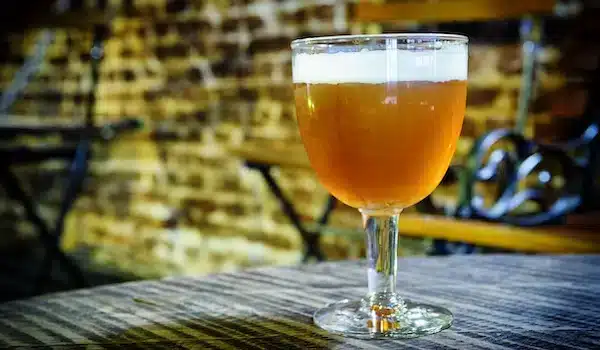
The color is always pale — straw to deep gold — and the foam is a defining feature. A properly poured Belgian strong golden in a tulip glass has a thick, creamy, almost meringue-like head that lasts the life of the glass. If you compare it to a Belgian blond ale, the differences are clear: the blond is softer, lower in ABV, and less intensely yeast-forward. The strong golden is more extreme in every direction.
Duvel: The Benchmark and Its Influence
Duvel Moortgat Brewery has been making Duvel in Puurs-Sint-Amands since 1871, though the strong golden version we know today was developed in the late 1960s and refined through the 1970s. The original inspiration was a Scottish ale; the result was something entirely Belgian. Duvel is now available in over 60 countries and consistently appears at the top of global beer rankings. It’s the GOAT of the style.
The influence of Duvel on the global craft beer world is significant — it’s one of the styles American and Australian craft brewers genuinely attempted to replicate before developing their own traditions. You can taste that influence in a lot of modern high-ABV golden ales that use Belgian yeast strains. The original is still the best version of the style, though.
Best Belgian Strong Golden Ales to Try
These are the bottles worth tracking down — from the canonical examples to a few that push the style in interesting directions.
Duvel — Puurs-Sint-Amands, 8.5% ABV. The benchmark. Pear and apple up front, white pepper mid-palate, long dry finish with alcohol warmth. Widely available internationally. Drink it in the branded tulip glass if you can — the head is part of the experience.
Delirium Tremens — Huyghe Brewery, Melle. 8.5% ABV. Named after the DTs — the severe alcohol withdrawal syndrome — which tells you what kind of beer this is. Pale pink ceramic bottle, elephant label, and a beer that’s slightly sweeter and more fruit-forward than Duvel. One of the most recognizable Belgian beers worldwide. Very good.
La Chouffe — Brasserie d’Achouffe, Achouffe. 8% ABV. Known for the gnome on the label and a slightly different personality to the rest of the style — more citrus and herb character, a touch of coriander in the recipe. Less intensely peppery than Duvel, more aromatic. A great option if the classic version feels too austere.
Piraat — Van Steenberge, Ertvelde. 10.5% ABV. The pirate of the style — the highest ABV in the regular lineup and one of the strongest blond ales made in Belgium. Warming, rich, and boozy in a way that Duvel deliberately avoids. Less dry, more body. Worth trying if you want to see how far the style can stretch.
Straffe Hendrik Blonde — De Halve Maan Brewery, Bruges. 9% ABV. Brewed in one of Belgium’s most beautiful breweries — De Halve Maan is still operating in the center of Bruges, connected to its tank farm by a 3.3km underground beer pipeline completed in 2016. The blonde is excellent: more hop-forward than most of the category, with a pronounced herbal quality that sets it apart.
Frequently Asked Questions (FAQ)
What ABV is Belgian strong golden ale?
Belgian strong golden ale typically runs between 7.5% and 10.5% ABV, with most of the best-known examples sitting around 8–8.5%. Duvel is 8.5%, Delirium Tremens is 8.5%, La Chouffe is 8%, and Piraat pushes to 10.5%. The high ABV is part of the style’s definition — but the bone-dry finish and light body disguise it effectively enough that these beers are easier to over-consume than almost anything else in the beer world.
Is Belgian strong golden ale the same as a tripel?
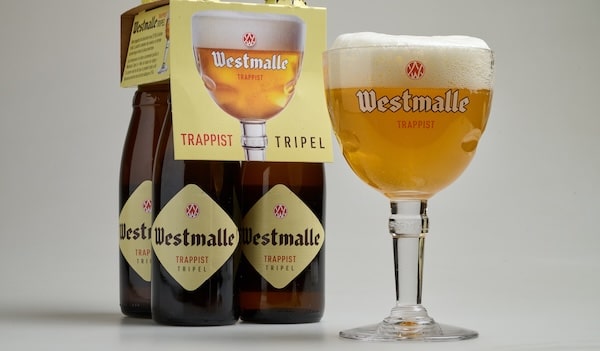
No — they’re related but distinct. A Belgian tripel is typically brewed in a monastery or abbey context (or styled after those beers), with a sweeter malt character, more body, and a slightly different yeast profile. Belgian strong golden ale tends to be drier, more intensely carbonated, and more aggressively yeast-forward. The ABV ranges overlap, but the flavor profiles diverge. Westmalle Tripel and Duvel are both pale, both strong, but they taste noticeably different in the glass.
Why does Belgian strong golden ale have such a big head?
The thick, persistent foam comes from a combination of high carbonation (from bottle conditioning with extra yeast and sugar) and the beer’s protein and hop content, which help stabilize the head. Belgian strong golden ales are among the most highly carbonated beers made — CO₂ levels can be three to four times those of a standard lager. When poured correctly into a tulip glass at the right temperature, the head builds to several centimeters and holds for the life of the glass. It’s not decoration — it carries aroma.
How should you pour a Belgian strong golden ale?
Slowly, in a clean tulip glass that’s been rinsed with cold water. Hold the glass at a 45-degree angle and pour steadily down the side, then straighten as you get to the last third of the bottle to build the head. The head should be thick and white — three to four fingers. If you pour too fast or the glass is warm or has any soap residue, the carbonation explodes, and you waste the beer. Serve between 45–54°F (7–12°C). Let the bottle come up slightly from fridge temperature before pouring.
Is Duvel the strongest Belgian beer?
No — Duvel at 8.5% is strong, but far from the strongest Belgian beer. Piraat reaches 10.5%, and some specialty Belgian beers push well beyond that. The high alcohol beer space in Belgium includes quadrupels like Westvleteren 12 (10.2%) and various barrel-aged or seasonal releases from Trappist and craft breweries that regularly hit 12% and above. Duvel’s reputation for strength is more about how easy it is to drink than the raw ABV number.
Join the Craft Beer Me Community
Belgian strong golden ale is the kind of style that turns casual beer drinkers into serious ones. Sign up for the Craft Beer Me newsletter for weekly Belgian beer guides, brewery profiles, and homebrewing content. And come find fellow Belgian beer fans in the Craft Beer Me community — it’s free, and the Duvel recommendations alone are worth it.
Sign Up for Our Newsletter