West Coast IPA is an American India Pale Ale defined by assertive hop bitterness, piney and citrusy aromas, and a clean, dry finish. Brewed with Pacific Northwest hops like Cascade, Simcoe, and Centennial, it typically runs 6–7.5% ABV with 50–70+ IBU — crystal clear in the glass, bitter on the palate, and the style that built American craft brewing into what it is today.
For a stretch in the 2010s, hazy IPAs took over, and West Coast IPA got written off as old news. That turned out to be premature. The style has come back hard, with a new generation of brewers rediscovering what made it great in the first place — the clean bitterness, the resinous aromatics, the satisfying dry finish that makes you reach for another sip. If you haven’t explored it properly, now’s a good time to start.

What Is a West Coast IPA?
West Coast IPA is a regional variant of American IPA that developed along the California coast from the late 1980s onward. The term “West Coast” distinguishes it from the hazy New England-style IPAs that emerged in the 2010s, where hazy IPAs are soft, juicy, and opaque; West Coast IPAs are clear, bitter, and dry. That contrast is the clearest way to understand the style.
The defining characteristics are aggressive hop bitterness, prominent piney and citrusy aromas from dry hopping, a clean malt backbone that stays well out of the way of the hops, and a finish that’s bone dry. According to the BJCP’s American IPA style guidelines, the style calls for “medium-high to very high bitterness” with hop flavor that ranges from prominent to intense — and a fermentation profile clean enough to let the hops do all the talking.
West Coast IPA: Quick Stats
- Color: Pale golden to light amber, clear (SRM 6–14)
- ABV: 6.0–7.5%
- IBU: 50–70+ (high bitterness)
- Aroma: Pine, resin, grapefruit, citrus, sometimes floral or tropical
- Taste: Assertive hop bitterness, light clean malt, long dry finish
- Mouthfeel: Medium-light body, medium-high carbonation, dry
What Does West Coast IPA Taste Like?
The first thing you notice is the bitterness — not harsh, but present and assertive from the first sip. Behind it, depending on the hops used, you’ll get a range of citrus notes (grapefruit, orange, lemon), piney resin, and sometimes a slight floral quality. Hop-forward doesn’t begin to cover it. These beers are built around the hops, and everything else — the malt, the yeast, the water — is there to support rather than compete.
The malt base is deliberately restrained. A light, clean biscuit character is about as much as you should notice — just enough to keep the beer from tasting like hop water. The finish is dry, meaning the sweetness you get from the malt clears quickly and leaves the bitterness to linger. That lingering bitterness is a feature, not a flaw. It’s what hop-heads have been chasing in this style for thirty years.
The appearance is also worth noting. West Coast IPAs are filtered and clear — when you hold one up to the light, you can see straight through it. This is the opposite of hazy IPAs, and it’s not just aesthetic. The filtration removes hop compounds that contribute to the pillowy, juicy character of NEIPAs, leaving behind a sharper, more precise bitterness instead.
West Coast IPA vs Hazy IPA: Key Differences
This is the comparison that comes up most often, and it’s worth understanding clearly because the two styles sit at opposite ends of the IPA spectrum.
- Appearance: West Coast is clear and golden; hazy IPA is opaque and often orange-yellow
- Bitterness: West Coast is aggressively bitter; hazy IPA has very low perceived bitterness
- Flavor: West Coast leads with pine and citrus; hazy IPA leads with tropical fruit and juice
- Finish: West Coast finishes dry and bitter; hazy IPA finishes soft and slightly sweet
- Mouthfeel: West Coast is crisp and medium-light; hazy IPA is thick and almost creamy
- Carbonation: West Coast has higher carbonation; hazy IPA tends to be softer
Neither is objectively better — they’re just different experiences. If you want something juicy and tropical, a hazy NEIPA is probably your call. If you want something sharp, clean, and genuinely bitter, West Coast is the one. The good news is that most well-stocked tap lists carry both.
The History of West Coast IPA
The story starts in San Francisco in 1975, when Anchor Brewing released Liberty Ale — a pale, aggressively hopped beer brewed entirely with Cascade hops that had only just been developed by Oregon State University. It wasn’t called an IPA at the time, but it established the template: American hops, assertive bitterness, clean and dry.
Through the 1980s and into the 1990s, California breweries started building on that foundation. Sierra Nevada Pale Ale brought Cascade hops to a wider audience. Then breweries like Russian River, Stone, and Lagunitas started pushing the bitterness and hop aroma further — bigger, more resinous, more piney. The result was a style that was distinctly Californian, distinct from anything being produced in England or the East Coast, and completely unlike the macro lagers that dominated American shelves.
Pliny the Elder, first brewed by Russian River’s Vinnie Cilurzo in 2000, became the benchmark. Lines formed. Beer enthusiasts drove hours to get a four-pack. The beer influenced a generation of IPA brewers across the country and helped cement the West Coast style as the defining expression of American craft beer. As VinePair notes in their West Coast IPA brewery guide, Russian River is “as much responsible for the enduring IPA craze as any single craft brand.” That’s not an overstatement.
Hazy IPAs eventually took over the market in the late 2010s, and for a few years, West Coast IPA was unfairly dismissed. But the style never actually went away, and the craft beer world has largely come back around to appreciating what makes it special. For more on how the IPA category as a whole fits together, our guide to different IPA types covers every major variant.
The Best West Coast IPAs to Try
These are the beers that define the style — from the ones that built it to the ones keeping it relevant today.
Pliny the Elder — Russian River Brewing, Santa Rosa, CA
The GOAT. Pliny the Elder is technically a Double IPA — bigger malt bill, higher ABV at 8% — but it’s the beer that codified what West Coast IPA should be. Pine resin and citrus lead; the bitterness is high but impeccably balanced, and the finish is long and dry without being harsh. Coveted for a reason. It’s released year-round at the brewery and distributed across California, with limited availability elsewhere. If you can find it fresh, clear your afternoon.
Stone IPA — Stone Brewing, Escondido, CA
The most widely available true West Coast IPA on the American market, and one that holds up well against more boutique offerings. Big citrus and pine aromas, clean malt backbone, aggressive bitterness, dry finish. Stone has been making this since 1997 and hasn’t changed what works. At 6.9% ABV, it’s exactly what West Coast IPA should be — you can find it almost anywhere in the US.
Torpedo Extra IPA — Sierra Nevada, Chico, CA
Sierra Nevada developed a proprietary “hop torpedo” device that cold-steeps whole hop cones directly in the beer post-fermentation — the result is an intensely aromatic IPA with a notably resinous, piney character that’s hard to replicate with standard dry hopping. At 7.2% ABV, it has enough body to carry the hop load, and the finish is clean and dry. Widely available nationally.
Sculpin IPA — Ballast Point, San Diego, CA
San Diego has been one of the heartlands of West Coast IPA, and Sculpin is one of its most celebrated exports. Where most West Coast IPAs lean piney and resinous, Sculpin goes more floral and fruity — apricot and peach upfront, with a clean grapefruit bitterness on the finish. It’s a slightly more approachable entry point into the style without compromising the dry, bitter finish that defines it.
Lagunitas IPA — Lagunitas Brewing, Petaluma, CA
One of the most ubiquitous craft IPAs in the country, and for good reason. Lagunitas IPA is dank, resinous, and reliably bitter — a textbook West Coast IPA that’s easy to find and hard to argue with. The floral hop aroma carries well out of the can, the bitterness is assertive without being aggressive, and the finish stays dry. At 6.2% ABV, it’s on the lighter end of the style, which makes it the most sessionable option on this list.
Blind Pig IPA — Russian River Brewing, Santa Rosa, CA
Often overshadowed by Pliny the Elder, Blind Pig is Russian River’s standard IPA and every bit as well-made. Slightly lower ABV at 6.1%, with a hop profile that leads with citrus and tropical notes rather than pure pine resin. It’s the more approachable Russian River IPA, and for many drinkers it’s the better everyday option. Harder to find outside California, but worth tracking down.
How to Get the Most Out of a West Coast IPA
A few things genuinely make a difference with this style.
Drink it fresh. West Coast IPA is probably the most perishable style in craft beer. The hop compounds responsible for those pine and citrus aromas degrade quickly — a three-month-old West Coast IPA tastes noticeably flatter and more muted than a fresh one. Check the canning date, buy the freshest can you can find, and drink it within 60 days. If a can doesn’t have a date on it, that’s a red flag.
Serve it cold. Unlike some styles that open up at warmer temperatures, West Coast IPA drinks best cold — around 45–50°F. The bitterness can become overpowering as the beer warms, and the carbonation that keeps the mouthfeel lively starts to flatten.
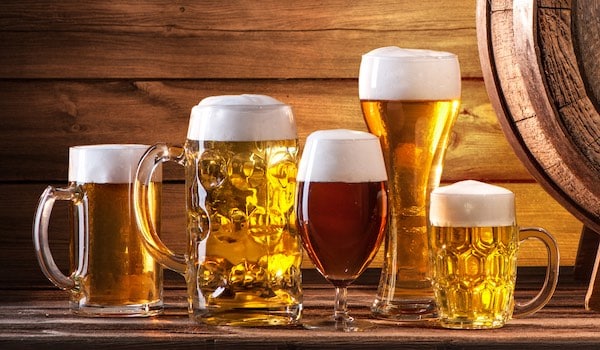
Use the right glass. A tulip or shaker pint works well — the wider mouth lets the hop aromas hit you properly on the pour. Don’t use a narrow pilsner glass, which traps the aroma inside.
If you want to explore the broader IPA family — including session options and the Double IPA that West Coast IPAs inspired — our guide to Double IPAs and our session IPA breakdown are good next reads. And for a full breakdown of what makes beer hoppy in the first place, our hoppiness guide covers everything you need to know.
West Coast IPA FAQ
What makes a West Coast IPA different from a regular IPA?
West Coast IPA is a specific regional style of American IPA defined by its clear appearance, assertive bitterness, and dry finish. It’s distinguished primarily from New England (hazy) IPA, which is opaque, lower in bitterness, and leans toward juicy tropical flavors. West Coast is sharp, clean, and bitter; hazy IPA is soft and fruit-forward.
Is West Coast IPA very bitter?
Yes — noticeably more so than most other IPA styles. West Coast IPAs typically run 50–70+ IBU, which places them among the more bitter styles in craft beer. The bitterness is balanced by a dry finish rather than sweetness, so it’s sharp rather than harsh, but there’s no hiding the hops here.
What hops are used in West Coast IPA?
The classic West Coast hop varieties are Cascade, Centennial, Chinook, Simcoe, and Amarillo — all American-grown varieties known for citrus, pine, and resin. More modern versions sometimes incorporate Citra or Mosaic, which push the profile toward tropical fruit while keeping the bitterness high. Cascade, in particular, is the variety most associated with the West Coast style.
Why do West Coast IPAs taste different from hazy IPAs?
The main differences come down to filtration and dry hopping technique. West Coast IPAs are filtered clear, which removes compounds that soften bitterness. Hazy IPAs use heavy late-addition and dry hopping without filtration, which produces the opaque appearance and softer, juicier flavor. The malt bill and yeast choices also differ — West Coast uses a cleaner fermentation that keeps all the focus on the hops.
How strong is a West Coast IPA?
Most West Coast IPAs fall between 6% and 7.5% ABV. They’re stronger than a session IPA or pale ale, but not as big as a Double IPA. The higher ABV helps carry the significant hop load — a lower-alcohol beer would struggle to balance that much bitterness.
Join the Craft Beer Me Community
West Coast IPA is one of those styles that gets people genuinely passionate — and arguments about the best examples are always welcome in the Craft Beer Me Facebook group. Drop your recommendations, share what’s in the glass, and swap notes with people who take this stuff as seriously as you do. For more style guides, brewery picks, and homebrewing content delivered to your inbox, sign up for the Craft Beer Me newsletter at the bottom of the page.
Sign Up for Our Newsletter