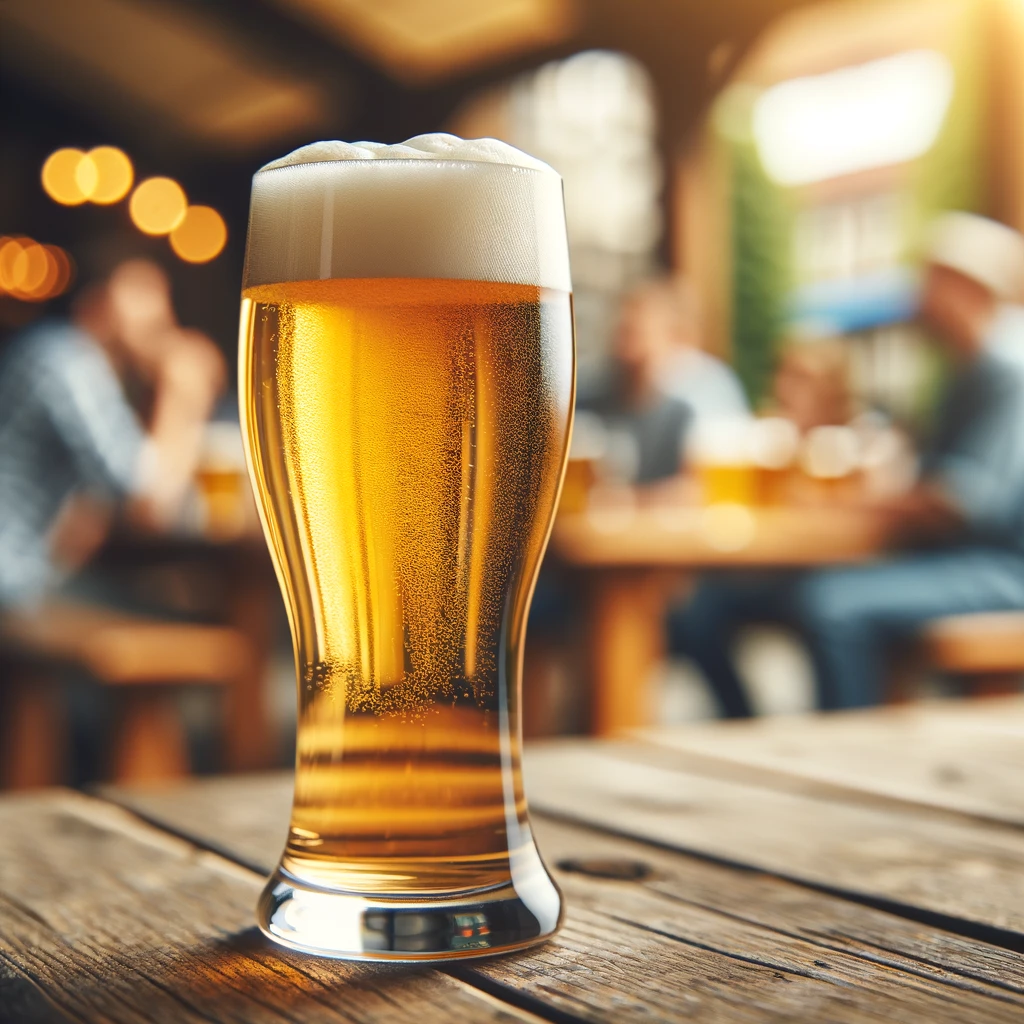

American lager beer is a pale, light-bodied, highly carbonated lager brewed with adjuncts like corn or rice alongside barley malt. It’s designed for maximum refreshment and easy drinkability — mild in flavor, crisp and clean on the palate, with low bitterness and a dry finish. ABV runs 4.2–5.3%. It’s the best-selling beer style in the United States by a massive margin.
American lager is what most of the world thinks of when they picture “a beer.” Budweiser, Coors, Miller Lite, Pabst Blue Ribbon — these are American lagers. They dominate the market not by accident, but because they were engineered to appeal to the widest possible audience: cold, clean, and unchallenging.
The craft beer world spent the last 30 years looking down on American lager. The pendulum has swung back. The real heads now recognize that a crispy, perfectly cold American lager has its place — and that making one well is harder than it looks.
How American Lager Became the World’s Most Popular Beer
American lager’s story starts with German immigration in the mid-1800s. Millions of German settlers brought their lager-brewing traditions with them, and by the late 1800s, American lager was competing seriously with the ales that had dominated the country since the colonial era.
But American brewers faced a challenge: North American barley produced a protein-heavy beer that was darker and less stable than European lagers. The solution was adjuncts — specifically corn and rice, which lighten the body, reduce protein, and improve stability without adding much flavor. This is why American lager tastes different from a German or Czech lager. The adjuncts aren’t a corner-cutting measure; they’re fundamental to the style’s character.
Adolphus Busch at Anheuser-Busch was the key figure in mass-producing the style. He pioneered pasteurization and refrigerated rail cars, which allowed him to ship beer nationally while it was still cold and fresh. Budweiser launched in 1876. By the early 1900s, American lager had become the dominant beer style in the country.
Prohibition (1920–1933) nearly destroyed American brewing. When it ended, the breweries that survived went back to the lightest, most accessible lager they could produce — partly to recapture drinkers who had gone 13 years without beer, partly because lighter beers could be produced faster and cheaper. American lager locked in its defining characteristics: pale, light, crisp, mild.
What Does American Lager Taste Like?
If you’re expecting complexity, American lager will disappoint you. That’s not the point. The point is clean, crisp refreshment — and at that, the style excels.
Flavor is light and grainy. There’s a faint sweetness from the malt, very little bitterness (typically 8–18 IBUs), and almost no hop aroma. The corn or rice adjuncts contribute a clean lightness without adding obvious flavor. The carbonation is high, which helps carry what little flavor exists and contributes to the clean finish.
Color is pale straw to light gold (2–4 SRM). Clarity is brilliant. The beer is meant to look as clean and light as possible in the glass. Cold temperature is important — American lager at room temperature tastes noticeably worse than the same beer at 35–38°F. It’s engineered to be served cold.
The key quality metric for this style isn’t complexity — it’s consistency and cleanliness. An off-flavor in a mild American lager has nowhere to hide. That’s why the major macro breweries invest so heavily in quality control. A Budweiser needs to taste exactly the same whether it was brewed in St. Louis or shipped to a bar in Montana.
American Lager vs. American Light Lager
These are separate styles, though closely related. American lager (sometimes called American standard lager) runs 4.2–5.3% ABV and has a bit more body and malt character. American light lager — Bud Light, Coors Light, Miller Lite — is lower in calories and alcohol (typically 3.8–4.2% ABV) and even lighter in body and flavor.
American light lager has actually outsold American standard lager since the 1990s. Miller Lite launched in 1975 and changed the market permanently. Today, light lagers dominate the mass-market segment. Standard American lager is increasingly the “more flavorful” option among macro beers — which says something about how far the market has shifted.
The Craft Take on American Lager
The craft beer world spent years avoiding American lager, then — inevitably — embraced it. What started as ironic nostalgia (small breweries making “throwback” versions of classic lagers) has evolved into a genuine craft movement around clean, well-made American lager.
The best craft American lagers use higher-quality ingredients than their macro counterparts: better base malts, real corn or rice rather than adjunct syrups, and more carefully selected lager yeast strains. The result is a beer that’s still light and refreshing but with noticeably more character than a mass-market option.
This matters because it’s hard to make well. There’s no hops or dark malt to mask flaws. A clean, crisp American lager is a technically demanding beer that earns respect from serious brewers. Our guide to beer fermentation explains why lager fermentation is more technically challenging than ale fermentation — temperature control is everything.
Some American Lagers to Try
A mix of classics and craft options worth having.
Pabst Blue Ribbon (Milwaukee) — the craft bar’s ironic favorite that turned into a genuine one. At its best, it’s a solid American lager with a clean, slightly sweet malt character. It’s also one of the most affordable options on any tap list.
Yuengling Traditional Lager (Pennsylvania) — America’s oldest brewery has been making this amber-tinged American lager since 1829. It’s noticeably more flavorful than most standard American lagers, with a hint of caramel malt and a clean finish. If you’re in the eastern US, it’s everywhere. Worth every penny.
Tröegs Sunshine Pils (Pennsylvania) — technically marketed as a pilsner but brewed in the American lager tradition. Crisp, bright, and clean with just enough hop presence to keep it interesting. Outstanding summer drinking.
Bierstadt Lagerhaus Slow Pour Pils (Colorado) — Bierstadt does lagers right. Their slow-pour pilsner takes 45 minutes to pour (really) and delivers a clean, technically impeccable American-style lager that puts most mass-market options to shame.
Budweiser (Anheuser-Busch) — say what you will, but the Budweiser recipe is a legitimate piece of American brewing history. Beechwood aging, specific yeast strain, rice adjunct. At its freshest, it’s a very clean American lager that does exactly what it’s supposed to do.
Frequently Asked Questions
What is the difference between American lager and regular lager?
American lager is distinguished by the use of adjuncts — corn or rice — alongside barley malt. European lagers (German, Czech) are typically all-malt. The adjuncts make American lager lighter in body, paler in color, and less malty in flavor. American lager is also generally lower in bitterness and hop character than its European counterparts.
Why is corn or rice used in American lager?
American barley historically had higher protein content than European barley, which made all-malt lagers darker and cloudier. Corn and rice are low-protein adjuncts that lighten the body, improve clarity, and increase stability — all essential for a pale, clear, shelf-stable lager at mass scale. Modern brewers continue using adjuncts because they’re fundamental to the style’s character, not just cost-cutting.
Is Budweiser an American lager?
Yes — Budweiser is the most famous American lager in the world. It uses rice as an adjunct alongside barley malt, is fermented with lager yeast, and aged on beechwood chips. It’s the quintessential example of the style: pale, light-bodied, crisp, and clean. Love it or leave it, it’s an important beer historically.
Join the Craft Beer Me Community
Whether you’re into macro lagers or craft takes on the style, there’s always more to explore. Sign up for the Craft Beer Me newsletter for weekly style guides and picks.