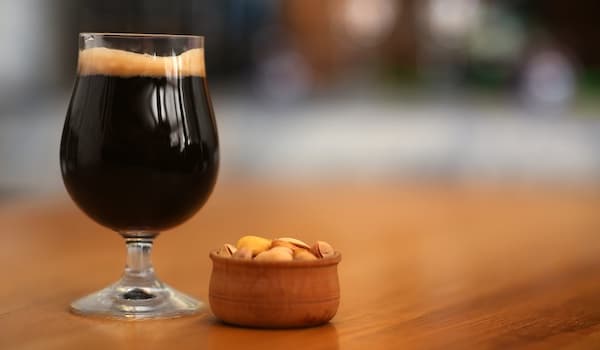

Irish stout is a dark, dry ale brewed with roasted barley that gives it a distinctive coffee and dark chocolate character. Despite the intimidating color, it’s lighter in body and alcohol than most people expect — usually sitting around 4–5% ABV — and finishes clean and dry rather than heavy or sweet. It’s one of the most sessionable dark beers in the world.
You already know what this looks like. The pitch-black body, the cascading pour, the dense cream-colored head that takes its time settling. Irish stout has one of the most recognizable visual identities in all of beer, and Guinness Draught is the reason. It’s been poured in pubs around the world for centuries, and if you’ve ever been handed one on a dark afternoon in a good Irish pub, you understand why the style has lasted.
What many people don’t realize is that Irish stout is one of the most approachable dark beers going. The color signals intensity, but the flavor is more nuanced than that — roasty and dry rather than rich and heavy. Once you understand what the style is actually doing, you’ll drink it differently.
What Makes Irish Stout Different From Other Stouts?
The key ingredient is unmalted roasted barley. Unlike most dark beers, which get their color from roasted malted barley, Irish dry stout uses a significant portion of raw barley that’s been roasted without malting — a distinction the BJCP highlights as the defining characteristic of the Dublin-style stout. That distinction matters. Unmalted roasted barley produces a sharper, drier roast character — coffee and dark chocolate with a clean, astringent edge — rather than the sweeter, more rounded roast you’d get from roasted malt.
The result is a beer that’s dark but dry. Low residual sweetness. No lingering heaviness. A finish that’s clean and slightly bitter, almost like an espresso shot with the cream added. This dryness is the defining characteristic of the Irish dry stout, and what separates it from sweeter English stouts and the much bigger imperial stout.
Hops are present but supporting — 25–45 IBUs, enough to contribute to the dry finish without asserting themselves as a flavor. Nitrogen service (instead of CO2) in draft versions creates the famous dense, creamy head and smooth mouthfeel that Guinness drinkers know well.
Why Does Irish Stout Taste Lighter Than It Looks?
Because the color comes from roasting, not from sugar. A pint of Guinness Draught is actually lower in calories than many pale ales — around 125 calories — because the roasted barley contributes color and flavor without a lot of fermentable sugars. The alcohol is genuinely modest at 4.2%. The body is light-to-medium.
People who refuse to try dark beer based on color are missing one of the great tricks in brewing. Irish stout looks heavy and drinks light. That’s not an accident — it’s a deliberate design choice that Guinness perfected over more than 250 years of production. If you’re skeptical, try a Guinness Draught on nitro and pay attention to how your expectations and the reality diverge. It’s a genuinely surprising beer the first time you really focus on it.
The Perfect Guinness Pour
If you’re drinking Irish stout on draft, the pour matters. Tilt the glass at 45° and fill it about three-quarters full. Set it down and let it rest for at least 90 seconds while the cascade settles — you’ll watch the beer go from a murky dark brown to pure black as the nitrogen bubbles slowly rise and fall. Then top it up slowly to create the domed cream head. Total time: about two minutes.
Is it worth it? Yes. The settled pint drinks completely differently from a rush job. The head is denser, the mouthfeel is smoother, and the whole experience is noticeably better. Patience is key — and the pub that won’t give you the two minutes isn’t taking the beer seriously.
Best Irish Stouts to Try
Start with the obvious one, then branch out from there.
Guinness Draught — The original, and still the benchmark. On draft with nitrogen, there is nothing quite like a properly poured Guinness. Coffee, dark chocolate, dry roast, dense cream head. It’s a perfectly designed beer that hasn’t needed to change in decades. If you haven’t had it on draft in a good pub, that’s the starting point — canned Guinness with the nitrogen widget is a reasonable substitute, but it’s not the same experience.
Murphy’s Irish Stout — Cork’s answer to Guinness and a genuine alternative worth knowing. Murphy’s is slightly sweeter and smoother than Guinness, with a softer roast character. A little more approachable for newcomers to the style, and often overlooked simply because it’s not Guinness.
Beamish Irish Stout — Another Cork classic. Beamish sits between Murphy’s and Guinness in character — a little more roast than Murphy’s, a little softer than Guinness. Not always easy to find in the US, but worth tracking down at an Irish pub that takes their taps seriously.
Left Hand Milk Stout Nitro — Technically a milk stout rather than a strict Irish dry stout, but Left Hand’s nitro version is one of the best dark beers available in cans across the country. Smoother and sweeter than the dry style, with coffee and chocolate notes elevated by a touch of lactose sweetness. A great next step after you’ve nailed the Guinness experience.
Founders Breakfast Stout — Another step beyond the Irish style — this is an oatmeal coffee stout at 8.3% ABV. Much bigger, much richer, and a completely different experience. But if the dry stout has got you curious about where dark beer goes from here, Breakfast Stout is the direction. It’s one of the finest dark beers made in America. Check out our best beers for winter guide to see where it fits in the seasonal rotation.
What to Eat With Irish Stout
The dry, roasty character of Irish stout is one of the great food-pairing assets in beer. Oysters — yes, seriously — are the classic companion. The brine and minerality of the oyster and the dry roast of the stout elevate each other in a way that sounds strange and tastes brilliant. It’s been a beloved pairing in Ireland for centuries.
Beyond oysters: beef stew, braised short ribs, lamb dishes, hearty soups, and anything with deep savory flavors. Chocolate desserts work too — the dry roast plays off dark chocolate in interesting ways. Avoid anything too light or delicate; the roast character will overpower it.
Frequently Asked Questions (FAQ)
Is Irish stout heavy to drink?
No — this is the most common misconception about Irish stout. Despite the dark color, Irish dry stout is light-to-medium bodied with a modest ABV (usually around 4–5%). Guinness Draught, for example, has fewer calories than many pale ales. The color comes from roasted barley, not from sugar or high alcohol content.
What does Irish stout taste like?
Irish stout tastes of roasted coffee and dark chocolate, with a dry, slightly bitter finish. The mouthfeel is smooth (especially on nitro draft), and there’s very little sweetness — the dryness is the defining characteristic of the style. Think espresso more than hot chocolate. The aftertaste is clean and encourages the next sip.
How long does a Guinness pour take?
A proper Guinness pour takes about two minutes. Fill the glass three-quarters full at a 45° angle, let it rest for 90 seconds while the cascade settles, then top it off to create the domed cream head. Rushing the pour results in a foamy, unsettled pint that drinks noticeably worse than one that’s been given the full two minutes.
Sign Up for Our Newsletter