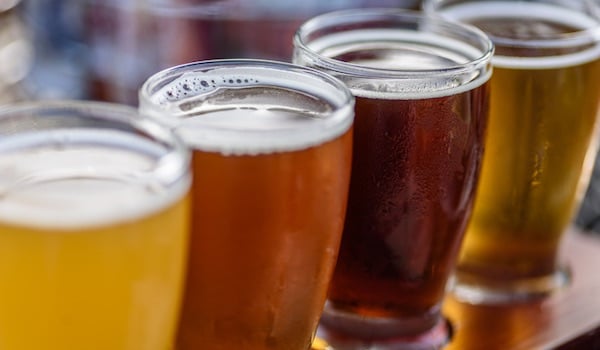

Amber ale is a medium-bodied American ale defined by its toasty caramel malt character, deep amber-to-copper color, and balanced hop presence. It’s richer and more flavorful than a pale lager, but approachable enough for anyone still warming up to craft beer. For drinkers looking for something between a pale ale and a dark beer, amber ale is the answer.
Ask most people about their gateway into craft beer, and amber ale comes up a lot. New Belgium Fat Tire is probably the most famous example in America — you’ve almost certainly seen that iconic red bicycle on the label. It was one of the first craft beers to reach genuine mainstream distribution, and for a lot of drinkers, it was the beer that proved craft beer could be delicious without being difficult.
But amber ale is more than just a stepping stone. It’s a genuinely satisfying style in its own right — one that pairs brilliantly with food, drinks well in almost any weather, and rewards attention. The best examples have layers of caramel, toffee, biscuit, and a clean hop finish that pulls everything together.
What Makes an Amber Ale?
The defining characteristic of amber ale is its malt bill. Brewers use crystal and caramel malts alongside the base grain to build the color and flavor — those malts give the beer its distinctive amber hue and the caramel sweetness that runs through every sip. It’s the same principle behind darker beers like porters and stouts, just dialed back considerably.
Hops in American amber ale provide balance rather than dominance. You’ll usually see 25–40 IBUs — enough to keep the caramel malt from becoming cloying, but not so much that you’re in IPA territory. American hop varieties like Cascade and Centennial are common, lending citrus and pine notes that complement the malt without steamrolling it.
ABV typically lands between 4.5% and 6.2%, with bitterness in the 25–40 IBU range — parameters that align closely with the BJCP’s 19A American Amber Ale classification. The body is medium. The color runs from amber to deep copper. And the finish is usually clean with just a touch of lingering caramel sweetness. It’s a well-rounded, no-fuss style — which is exactly why it works so well for so many people.
Amber Ale vs. Red Ale: Is There a Difference?
This depends on who you ask. In American craft brewing, “amber ale” and “red ale” are often used interchangeably — many beers that call themselves red ales are structurally identical to amber ales, and the terms are rarely used with strict precision outside of competition guidelines.
The BJCP (Beer Judge Certification Program) distinguishes American amber ale from Irish red ale and other red-colored styles, but in practice, if you see “amber ale” or “red ale” on tap at your local craft bar, you’re probably looking at something in the same flavor neighborhood: caramel malt, moderate hops, copper color, easy drinkability. The name often just comes down to the brewery’s preference.
What Does Amber Ale Taste Like?
The first thing you’ll notice is the caramel. It’s not as subtle as in a pale ale, and not as restrained as in a lager. Amber ale leads with a clean malt sweetness — caramel, toffee, a hint of biscuit — that’s genuinely satisfying without being heavy or sweet in an unpleasant way.
Behind the malt, you’ll usually pick up some hop presence. Depending on the recipe, that might be a gentle citrus note, a light pine resin character, or just a clean bitterness to balance the sweetness. The body is medium — fuller than a pale lager, lighter than most porters or stouts. The finish is clean, slightly dry, and genuinely drinkable.
It’s one of those styles where you can drink two or three without noticing, which is either a great quality or a warning, depending on your plans for the evening.
Best Amber Ales to Try
These are the versions worth seeking out. Some are classics you’ve heard of, some deserve more attention than they get.
New Belgium Fat Tire Amber Ale — The most recognized American amber ale in the country, and for good reason. Fat Tire is soft, malty, and reliable — toasty biscuit, light caramel, a gentle hop note in the finish, and a clean body that never feels heavy. It’s not the most complex beer, but it’s one of the most consistently excellent examples of the style.
Bell’s Amber Ale — Michigan’s Bell’s Brewing makes a version that leans slightly more toward the hops than Fat Tire, with brighter citrus notes sitting alongside the caramel malt. It’s a little livelier and a good choice if you want an amber with more hop presence.
Alaskan Amber — One of the older names in American craft brewing, Alaskan Amber is a smooth, malt-forward amber ale with a clean finish and gentle sweetness. It’s been around since 1986 and holds up as well today as it ever did. If you’re in the Northwest, you’ve probably had it. If not, track it down.
Tröegs Hopback Amber Ale — Pennsylvania’s Tröegs builds their amber around a late-hop addition that comes through a hopback — a device that steeps the beer through a bed of whole-leaf hops before chilling. The result is an amber ale with noticeably brighter, fresher hop aroma than most in the category. A genuine standout.
SweetWater 420 Extra Pale Ale — Technically an extra pale ale, but it sits right on the border of amber and is worth including here as an example of how the lines between American ale styles can blur. Caramel malt, citrus hops, easy drinkability. A great gateway beer from a great Georgia brewery.
What Food Does Amber Ale Pair With?
Amber ale might be the most food-friendly style in this guide. The caramel malt flatters almost anything with some char or smokiness — burgers, grilled sausages, BBQ ribs, roasted chicken. The hop bitterness cuts through fatty foods cleanly. And the moderate body doesn’t overpower lighter dishes the way a stout or porter might.
Try it alongside sharp cheddar, gouda, or a smoked cheese board. It works well with Mexican food, flatbread pizza, and hearty salads. And it’s a natural for fall — caramel malt and the first bite of autumn air are a combination that holds up every year without fail.
If you’re still finding your craft beer feet, our beginner’s guide to the best craft beers is a good next step. And if the malt character in amber ale has you curious about darker styles, our porter guide covers where the style goes next.
Frequently Asked Questions (FAQ)
Is amber ale the same as red ale?
In American craft brewing, amber ale and red ale are often used interchangeably. Both feature caramel malt character, copper to deep red color, and balanced hopping. The BJCP distinguishes between different red and amber styles, but in practice, if you see either term on tap, you’re usually looking at something in the same flavor neighborhood.
What does amber ale taste like?
Amber ale tastes of caramel and toasted malt up front, with a gentle hop bitterness in the finish. The body is medium and the finish is clean. Depending on the recipe, you might pick up notes of toffee, biscuit, light citrus, or pine. It’s richer than a lager but nowhere near as intense as a dark beer or a big IPA.
What is the most popular amber ale?
New Belgium Fat Tire Amber Ale is the most recognized and widely distributed American amber ale. It’s been around since 1991 and remains a benchmark for the style — soft, malty, and reliably good. Alaskan Amber is another long-standing classic, while Bell’s Amber Ale and Tröegs Hopback offer more hop-forward alternatives.
Sign Up for Our Newsletter