Belgian blond ale is a golden, moderately strong ale — typically between 6% and 7.5% ABV — that balances soft malt sweetness with the spicy, fruity character that Belgian yeast is famous for. It’s approachable, elegant, and more complex than it looks. This is the style that surprised a generation of lager drinkers and convinced them Belgian beer was worth exploring.
If you’ve ever picked up a Leffe Blonde and wondered what made it taste so different from anything else in the beer fridge — that slightly spicy, slightly fruity quality that sits underneath the malt — you’ve already met Belgian blond ale. That character comes from the yeast, and it’s what separates the style from the American blonde ales or British golden ales you might be used to.
Belgium has dozens of blond ales, from the mass-market abbey-branded versions most people know to small artisan breweries making genuinely exceptional golden ales that never make it outside their home region. This guide covers the style, how it’s made, and the best bottles to start with. For the full picture on Belgian beer, our Belgian beer guide covers every major style worth knowing.
How Is Belgian Blond Ale Made?
Belgian blond ale is brewed with pale pilsner malt as the base, which gives it the light golden color. Small additions of sugar — often clear candi sugar — are common, boosting the alcohol without adding body or heaviness. The result is a beer that’s stronger than it seems, with a dry, clean finish that lager drinkers find naturally approachable.
Hops are present but restrained. Most Belgian blond ales use noble varieties — Saaz, Styrian Golding — for a soft herbal or floral note rather than any serious bitterness. The bitterness sits low, typically 15–30 IBU. Belgian blond is not a beer where hop fans are looking for their fix.
The yeast is everything. Belgian ale strains produce a mix of phenols and esters during fermentation that give the beer its characteristic spicy-fruity edge — notes of pepper, clove, orange peel, and banana, usually in a restrained rather than overwhelming way. Fermentation temperature matters enormously; push too warm and the spice and fruit dominate, too cold and you lose the character that makes the style interesting. Understanding the beer fermentation process helps explain why Belgian yeast behaves so differently from standard ale yeast.
What Does Belgian Blond Ale Taste Like?
Belgian blond ale tastes golden in the best possible way — light-bodied enough to be easy drinking, but complex enough to hold your attention. The malt is soft and bready, never caramel-sweet. The yeast brings a gentle spice (white pepper, faint clove) and a fruity note that often reads as orange or lemon. The finish is dry and clean, which is why these beers disappear faster than you’d expect from something at 6.5% ABV.
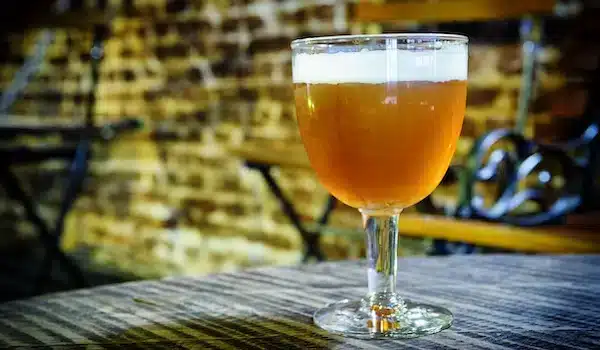
The color ranges from pale straw to deep gold. Clarity varies — some examples are crystal clear, others have a light haze from yeast. The foam is white and persistent. Carbonation is moderate to high, giving the beer a lively texture that adds to the impression of lightness even at higher ABV.
What separates a great Belgian blond from a mediocre one is integration. In the best examples, the malt, yeast, and hops are in balance — no single element dominates. You don’t get hit with pepper or clove or sweetness as separate notes. It all comes together as a soft, coherent package. That’s harder to achieve than it sounds. You can compare the style to a Belgian saison — both are yeast-driven, but the blond is softer and lower in tartness, while the saison leans drier and more rustic.
Abbey Blond Ales: The Leffe Effect
Leffe Blonde is probably the most widely recognized Belgian blond ale in the world. It’s brewed by AB InBev and has been since the 1980s — which some beer nerds hold against it, though the beer itself is actually decent. The abbey branding (Leffe is named after Leffe Abbey in Dinant) reflects a historical partnership between the brewery and the abbey rather than monks actually brewing the beer. The same is true of Grimbergen and Affligem.
The abbey blond ales are important because they introduced millions of people worldwide to the style. They’re well-made, widely distributed, and genuinely different from the mass-market lagers they sit beside on the shelf. But they’re the starting point, not the destination. The artisan and craft versions of the style are considerably more interesting.
Best Belgian Blond Ales to Try
Here’s where to start — from the reliable big names to the bottles worth hunting down.
Leffe Blonde — Dinant / AB InBev. 6.6% ABV. Soft malt, light banana and vanilla from the yeast, gentle pepper finish. Easy to find everywhere, dependably pleasant. A good introduction to the style even if it’s not the most complex example.
Affligem Blonde — Opwijk. 6.8% ABV. Made under license by Heineken but still interesting. More spice-forward than Leffe, with a herbal quality and a slightly more pronounced bitterness. The abbey connection here is genuine — Affligem Abbey has been a brewing site since 1074.
Grimbergen Blonde — Brussels. 6.7% ABV. Part of the Carlsberg portfolio but a solid example of the style. Spicy yeast character, light citrus, clean dry finish. More widely available than it used to be internationally.
Kasteel Blonde — Van Honsebrouck Brewery, Ingelmunster. 6.5% ABV. This one leans sweeter and more fruit-forward than the abbey ales — golden color with notable orange and peach from the yeast. A bit richer than your standard blond, and worth finding if you see it.
Blonde Volkaert — Small artisan release worth noting if you can find it on a Belgian beer import list. More hop-forward than most blonds, with a floral nose that distinguishes it from the abbey-style versions. The kind of beer that reminds you the style has more range than the big brands suggest.
Frequently Asked Questions (FAQ)
Is Belgian blond ale the same as Belgian golden ale?
No — these are distinct styles, though they’re sometimes confused. Belgian blond ale (BJCP 25B) is a moderate-strength ale, typically 6–7.5% ABV, with soft malt character and restrained yeast expression. Belgian strong golden ale (BJCP 25A) is more aggressive — higher ABV (7.5–10.5%), drier, more intensely yeast-forward, with more pronounced spice and alcohol. Duvel is the most famous example of the strong golden; Leffe Blonde is the most famous blond. They share a family resemblance but aren’t the same beer.
How strong is Belgian blond ale?
Most Belgian blond ales fall between 6% and 7.5% ABV. That’s stronger than most lagers and standard session ales, but moderate by Belgian standards. The dry finish and light body of the style can make the alcohol harder to notice than it should be — these beers drink easier than their ABV suggests. That’s worth keeping in mind if you’re pouring several rounds of Leffe and assuming it’s a light beer.
What’s the difference between Belgian blond ale and Belgian blonde ale?
Just spelling — “blond” and “blonde” are used interchangeably to describe the same style, depending on whether the brewer prefers the masculine or feminine form of the French/Dutch word for “blonde.” Leffe uses “Blonde” on its label; the BJCP style guidelines use “Blond.” There’s no meaningful difference in what’s in the bottle.
Is Belgian blond ale hoppy?
No. Belgian blond ale is a malt- and yeast-forward style with low to moderate bitterness. Hops are used mainly for balance, not as a flavor feature. If you’re looking for hop-forward Belgian ales, the closest you’ll find in the Belgian tradition are some of the newer craft interpretations — but traditional Belgian blond doesn’t compete with American IPA or pale ale for hop character. It’s a very different kind of complexity.
What glass should you use for Belgian blond ale?
Most Belgian blond ales have their own branded chalice or tulip glass, and the shape actually matters — the wider bowl concentrates the aroma from the yeast, which is the most interesting part of the beer. A standard tulip glass or goblet works well if you don’t have the brand-specific version. Avoid pint glasses; the narrow cylindrical shape doesn’t do anything useful for a beer with this much aromatic complexity. Serve between 45–50°F (7–10°C) — cold but not icy.
Join the Craft Beer Me Community
Belgian blond ale is a great gateway into the wider world of Belgian beer. Sign up for the Craft Beer Me newsletter for weekly style guides, brewery deep-dives, and homebrewing content. And come join the Craft Beer Me community to talk Belgian beer with other fans — it’s free.
Sign Up for Our Newsletter