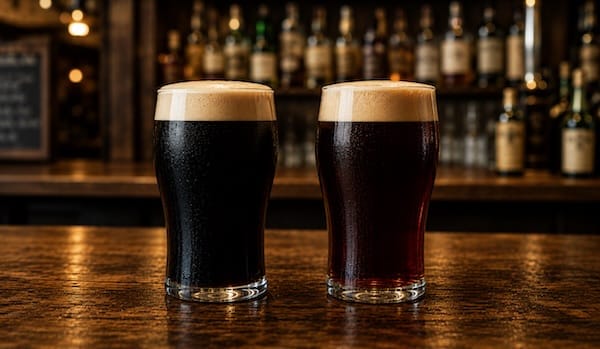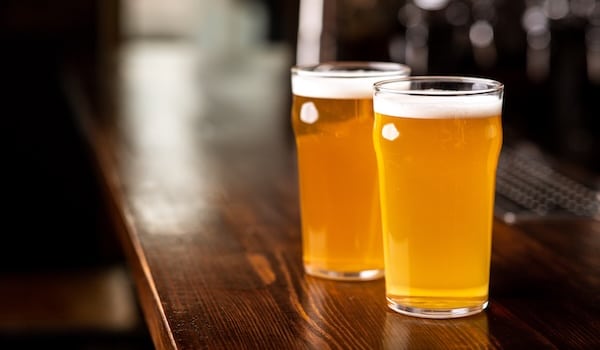
Lager vs stout is about as stark a comparison as beer gets. Stout is a dark, top-fermented ale made with roasted barley — rich, roasty, and full-bodied, with flavors of coffee, chocolate, and bitter grain. Lager is a cold-fermented, bottom-fermented beer known for being clean, crisp, and refreshingly light. Same basic ingredients, completely different results.
If you’ve ever handed a Guinness to someone who asked for “just a normal beer” and watched their face, you already understand the gap. These two styles sit at opposite ends of the flavor spectrum — and understanding what separates them makes you a better drinker, whether you’re choosing between them at a bar or figuring out which to bring to a party.

Stout vs Lager: At a Glance
| Stout | Lager | |
|---|---|---|
| Fermentation | Top-fermented (ale yeast) | Bottom-fermented (lager yeast) |
| Temperature | Warm fermentation (60–75°F) | Cold fermentation (35–50°F) |
| Color | Near black to very dark brown | Pale gold to amber |
| Flavor | Coffee, chocolate, roasted grain | Clean, crisp, malt or hop-forward |
| Body | Medium to full | Light to medium |
| Bitterness | Moderate to high (roast-driven) | Low to moderate (hop-driven) |
| Typical ABV | 4–8% (dry stout 4–5%) | 4–5.5% (most styles) |
| Serving temp | 50–55°F (cask), 45°F (kegged) | 38–45°F |
| Key examples | Guinness, Left Hand Milk Stout | Heineken, Pilsner Urquell |
The Biggest Difference: How They’re Fermented
The fundamental divide between stout and lager isn’t flavor — it’s yeast and temperature.
Stout is an ale. It’s brewed with top-fermenting yeast at warm temperatures, typically 60–75°F. That warm fermentation produces esters — fruity, complex aromatic compounds — alongside the roasty malt character that defines the style. The yeast works fast and expressively.
Lager uses bottom-fermenting yeast at cold temperatures, usually 35–50°F. The cold slows everything down. The yeast produces almost no esters, which is exactly the point — lager’s signature clean character comes from keeping the yeast as quiet as possible during fermentation. After primary fermentation, lagers are cold-conditioned (lagered) for weeks, smoothing out any remaining rough edges.
Our guide to ale beer goes into detail on how top fermentation works and why it produces such different results from lager yeast.
Flavor: What to Expect From Each
A dry Irish stout — the Guinness archetype — leads with roasted barley. You get coffee bitterness upfront, then a hint of dark chocolate, then a dry, slightly bitter finish. It’s not sweet. It’s not heavy. A pint of Guinness at 4.2% ABV is lighter in calories than most people assume, and the roasted character fools you into thinking it’s richer than it is.
A standard pale lager is the opposite experience. Clean on the nose, slightly grainy or bready on the palate, light-bodied, refreshingly carbonated. The bitterness is low. There’s no roast, no chocolate, no coffee — just a crisp, neutral base that goes down easily and pairs with almost anything. That’s not a knock — it’s a deliberate design.
Push further into each style and the range expands. Imperial stouts hit 8–12% ABV with intense dark fruit, vanilla, and bourbon-like depth — nothing like a Guinness. Dark lagers like Munich Dunkel bring toasted bread and subtle chocolate without any of the roasty bitterness of a stout. Styles overlap at the edges more than most people realize. For more on the stout end of things, our guide to porter vs stout explains how the dark beer family fits together.
Which Is Stronger — Stout or Lager?
At the standard commercial level, they’re roughly equal. A Guinness Draught is 4.2% ABV. A Heineken is 5%. A Budweiser is 5%. A session stout might be 3.5%, while a doppelbock lager can reach 7–8%.
The real outliers are imperial stouts — the boozy end of the stout spectrum runs 8–14% ABV, far beyond most lager styles. If you’ve had a Founders KBS or a Goose Island Bourbon County Brand Stout, you know these aren’t session beers by anyone’s definition. Sneaky strong doesn’t cover it.
But for everyday drinking, ABV isn’t the deciding factor between the two styles. Flavor is.
Which Should You Choose?
Choose stout if you want something with depth — roasty, dark, satisfying, particularly good with food. Stout pairs brilliantly with oysters (it’s a classic combination), beef stew, chocolate desserts, and strong aged cheeses. It rewards slow drinking and doesn’t need to be ice cold to taste good.
Choose lager if you want something refreshing, easy-drinking, and crowd-pleasing. Lager is the safer party beer, the hot-day beer, the with-pizza beer. It doesn’t demand attention — it just delivers a clean, reliable pint. That’s genuinely useful.
If you’re newer to craft beer and not sure which direction to go, our guide to the best beers for beginners is a good place to start before committing to either camp.
Stout vs Lager FAQ
Is stout an ale or a lager?
Stout is an ale — it’s brewed with top-fermenting ale yeast at warm temperatures. Despite being dark and sometimes smooth, it has nothing to do with lager fermentation. Guinness, Murphy’s, Left Hand Milk Stout — all ales. The confusion usually comes from people thinking dark beer equals lager, but color comes from the roasted malt, not the fermentation method.
Is Guinness a stout or a lager?
Guinness is a stout — specifically an Irish dry stout, brewed with top-fermenting ale yeast. It’s one of the most famous ales in the world. The creamy texture comes from nitrogen carbonation (a nitro pour), not from the fermentation style.
Which has more calories — stout or lager?
They’re closer than most people expect. A standard Guinness Draught has around 125 calories per pint. A Budweiser has around 145. Light lagers drop below 100 calories. Imperial stouts can push 250–350 calories per bottle. Stout’s dark color makes people assume it’s heavier than it is — but a dry Irish stout is actually one of the lower-calorie options in craft beer.
Can you mix stout and lager?
Yes — it’s called a Black and Tan (or Black and Gold). The classic version layers Guinness over a pale ale or lager in the same glass. The stout floats on top because it’s less dense. It’s a real drink, not a gimmick — though purists on both sides might argue you’re ruining two perfectly good beers.
Join the Craft Beer Me Community
Team stout or team lager? Come argue your case in the Craft Beer Me Facebook group — it’s where beer nerds settle exactly these kinds of debates. And sign up for the Craft Beer Me newsletter at the bottom of the page for more style guides, comparisons, and picks.
Sign Up for Our Newsletter