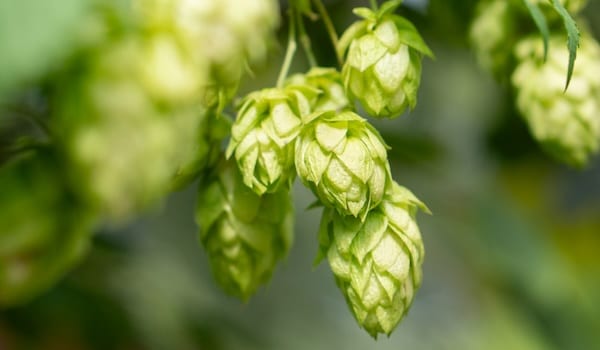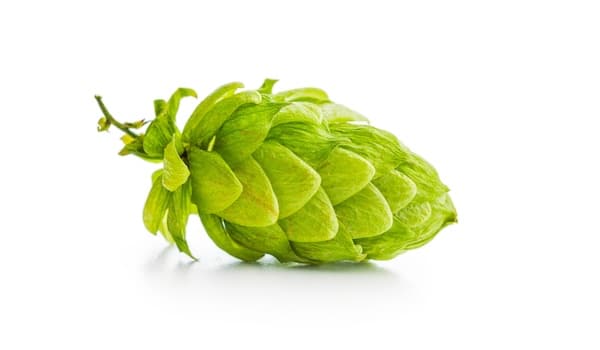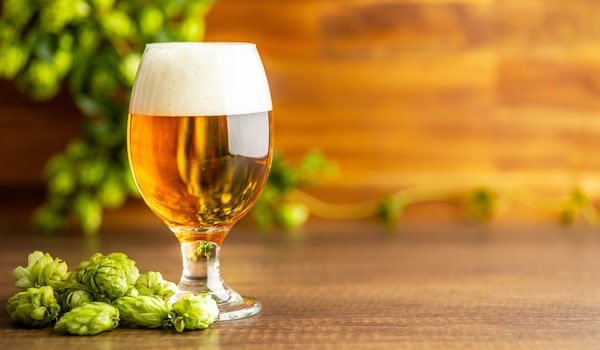

Simcoe hops are a dual-purpose American variety known for their bold combination of passion fruit, pine, earth, and a distinctive dankness that hop-heads love. Released in 2000 by Select Botanicals Group, Simcoe has become one of the most sought-after hops in craft brewing — essential to countless IPAs and NEIPAs, and responsible for one of the most recognizable aroma profiles in the game.
If you’ve had Heady Topper, you’ve had Simcoe. If you’ve had a great West Coast IPA with that pine-and-tropical-fruit-and-something-dank combo, Simcoe was probably in there. It’s not a quiet hop — it makes its presence known, and brewers who use it know exactly what they’re signing up for.
What Are Simcoe Hops?
Simcoe was developed by Select Botanicals Group — now part of Yakima Chief Hops — and released commercially in 2000. The breeding details remain proprietary, but the variety is primarily grown in the Yakima Valley in Washington State, which is the heartland of American hop farming. For years it was a closely guarded commodity; certain craft breweries had contracts that gave them first access to the annual harvest, making it genuinely hard to source for smaller producers.
That scarcity helped build Simcoe’s mystique. When Heady Topper became the most coveted beer in America in the early 2010s, part of the mystique was that it used Simcoe — a hop that home brewers were struggling to get their hands on. Availability has improved since then, but Simcoe is still more expensive than public-domain varieties like Cascade or Centennial.
What makes it worth the premium is the flavor. Simcoe delivers a combination of aromas that almost no single hop can replicate: tropical fruit (particularly passion fruit and blueberry), pine resin, and a distinctive earthy, dank quality that experienced craft beer drinkers recognize immediately. High alpha acids make it genuinely useful for bittering as well, which is why it’s classified as dual-purpose.
Simcoe Hop Flavor and Aroma Profile
Simcoe has one of the more complex aroma profiles of any American hop. The tropical fruit character — passion fruit, blueberry, and a hint of apricot — is there, but it sits alongside a pronounced pine/resin note and that earthy, dank quality that’s harder to put into words but instantly recognizable once you know it.
The dankness is the polarizing element. Some drinkers love it — it gives Simcoe-forward beers a depth and complexity that fruity hops like Citra don’t have. Others find it a bit much in large quantities. In well-made IPAs, the tropical and citrus notes balance the dankness into something genuinely exciting. Used too heavily without balance, the earthy/piney character can dominate.
As a bittering hop, Simcoe produces clean, firm bitterness with moderate cohumulone — the resulting bitterness is solid and well-integrated rather than harsh. Its high alpha acid content means you need less weight to hit your IBU target, which also means the other flavors in your recipe don’t get overwhelmed by bittering additions. That’s part of why it’s genuinely effective as a dual-purpose hop rather than just an aroma variety with high alpha acids that nobody actually uses at 60 minutes.
Simcoe Hops Brewing Stats
| Stat | Value |
|---|---|
| Alpha Acids | 12–14% |
| Beta Acids | 4–5% |
| Total Oil Content | 2–2.5 mL/100g |
| Myrcene | 60–65% of total oil |
| Farnesene | <1% |
| Cohumulone | 15–20% of alpha acids |
| Origin | USA (Yakima Valley, Washington) |
| Type | Dual-purpose |
The low cohumulone percentage (15–20%) is one of Simcoe’s best features for homebrewers. Lower cohumulone generally correlates with smoother, softer bitterness — so despite the high alpha acids, Simcoe produces a bittering quality that works in styles you might not expect a high-alpha hop to handle well.
Best Beer Styles for Simcoe Hops
- West Coast IPA — Simcoe’s natural habitat. The pine-tropical-dank combination is exactly what defines the West Coast IPA character. Often used alongside Centennial or Columbus for bittering, with Simcoe doing heavy aroma work late in the boil.
- New England IPA (NEIPA) — Simcoe adds tropical complexity and depth to hazy IPAs. Pairs particularly well with Citra and Galaxy in NEIPA recipes — Citra brings the citrus, Galaxy brings the stone fruit, and Simcoe brings the earthy backbone that keeps it from being one-dimensional.
- Double IPA — High-gravity beers need hops that can stand up to the malt. Simcoe’s intensity and high alpha acids make it well-suited to DIPAs where you want genuine hop character rather than subtle aroma.
- Imperial Stout — Used in small quantities for bittering in barrel-aged imperial stouts, where the earthy/piney character can complement the dark malt and oak notes.
- Pale Ale — In a lighter-bodied pale ale, a small Simcoe addition brings tropical complexity without overwhelming the beer. Works particularly well as a dry hop addition in American pale ales.
Top Commercial Beers Brewed With Simcoe Hops
- Heady Topper — The Alchemist (Vermont) — The GOAT double IPA uses Simcoe prominently alongside Citra and other varieties. If you want to understand what Simcoe can do, this is where you start — if you can find it.
- Kern River Citra DIPA — Kern River Brewing (California) — Despite the name, Simcoe plays a key supporting role alongside Citra. The combination of the two hops is why this beer has such depth.
- Dogfish Head 60 Minute IPA — Dogfish Head Brewery (Delaware) — A classic American IPA that uses Simcoe as part of its continuous hop addition process. Pine, citrus, and that characteristic dankness in a very well-integrated package.
- Founders Centennial IPA — Founders Brewing (Michigan) — Simcoe and Centennial working together. A benchmark American IPA that shows what happens when you put two high-alpha, high-aroma American varieties in the same kettle.
How to Brew With Simcoe Hops
Simcoe is versatile, but it’s not subtle. Here’s how to get the most out of it without letting one characteristic dominate the beer.
As a bittering hop: With alpha acids of 12–14%, you need less weight than lower-alpha varieties to hit your IBU targets. A half-ounce to one ounce at 60 minutes in a 5-gallon batch provides solid bitterness without loading the beer with excessive plant material. The low cohumulone means the bitterness will be cleaner than you might expect from a high-alpha hop.
As an aroma hop (late additions): Simcoe shines at flameout and whirlpool additions. The tropical and pine notes open up with heat below boiling temperature. Add 1–2 oz at flameout or as a whirlpool addition at 160–170°F for the best aroma extraction. This is where the passion fruit and blueberry notes come through most clearly.
Dry hopping: 1–2 oz per 5-gallon batch during fermentation or after. Simcoe dry hops produce a pronounced dank and piney character alongside the tropical fruit — if you want a cleaner tropical profile, use it alongside Citra or Galaxy rather than solo. Contact time of 3–5 days works well. For the full technique, our guide to dry hopping and double dry hopping covers everything you need to know.
Classic combinations: Simcoe + Citra is one of the most effective pairings in modern craft brewing — the citrus-tropical of Citra softens Simcoe’s dankness and the two together have a complexity neither achieves alone. Simcoe + Galaxy brings in stone fruit alongside the pine. Simcoe + Columbus or Chinook for West Coast IPA — full pine and resin, maximum dankness. For a broader look at how hop varieties interact, our types of hops guide covers the full flavor spectrum.
Simcoe Hop Substitutes
- Citra — Shares the tropical fruit character but lacks Simcoe’s dankness and pine. Best substitute if you want the fruit without the earth.
- Columbus (CTZ) — Similar alpha acid range and earthy/resinous character, but less tropical. Good substitute for the bittering dankness without the fruit.
- Chinook — Pine and grapefruit, high alpha acids. Lacks the tropical notes but delivers a similar intensity level.
- Mosaic — Tropical and complex with some earthy character. The closest overall substitute to Simcoe for aroma work in NEIPAs and West Coast IPAs.
Simcoe Hops FAQ
What does Simcoe hops taste like?
Simcoe hops have a complex flavor profile: passion fruit, blueberry, and pine resin alongside a distinctive earthy, dank quality. It’s one of the more recognizable hop profiles in American craft beer — less purely tropical than Citra, with more depth and a piney backbone that experienced IPA drinkers know immediately.
What beers are made with Simcoe hops?
Notable beers brewed with Simcoe hops include Heady Topper (The Alchemist), Dogfish Head 60 Minute IPA, Founders Centennial IPA, and countless West Coast and New England IPAs across the US craft scene. Simcoe is one of the most widely used hops in modern IPA brewing and appears in the hop bill of many beloved American craft beers.
Are Simcoe hops the same as Citra?
No. Both are proprietary American varieties, but their profiles are quite different. Citra is brighter and more purely tropical (citrus, mango, passion fruit) with minimal earthiness. Simcoe has more pine, earth, and dankness alongside its tropical fruit character. They’re often used together in IPAs because the combination is more complex than either achieves alone.
When were Simcoe hops developed?
Simcoe hops were developed by Select Botanicals Group (now part of Yakima Chief Hops) and released commercially in 2000. The variety is grown primarily in the Yakima Valley in Washington State. It gained widespread recognition in the 2010s as demand for tropical, high-alpha American hops exploded alongside the craft IPA boom.
What are the best substitutes for Simcoe hops?
Mosaic is the best all-around substitute for Simcoe — complex, tropical, and with some earthy depth. Citra works if you want the tropical fruit without the dankness. Columbus (CTZ) substitutes for the earthy/resinous character and high alpha acids if aroma isn’t the priority. For piney West Coast IPA character, Chinook is a reasonable stand-in.
Sign Up for Our Newsletter