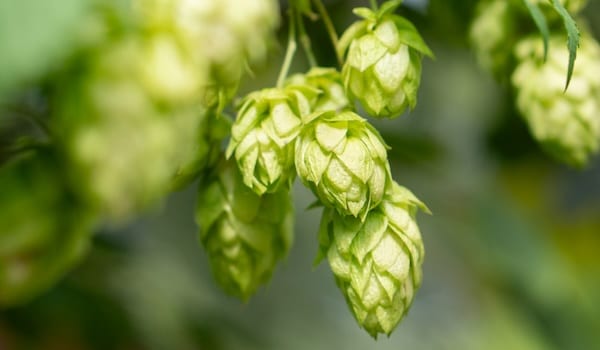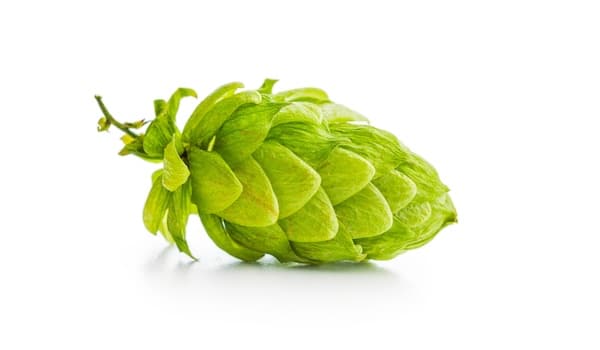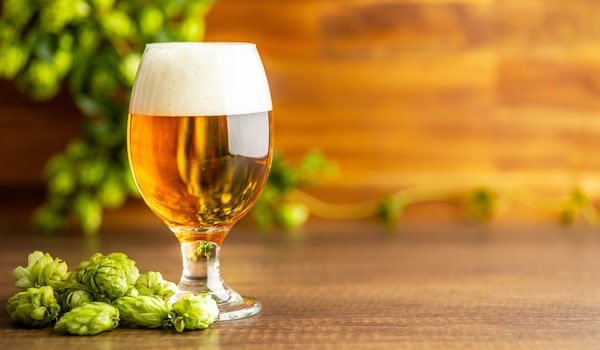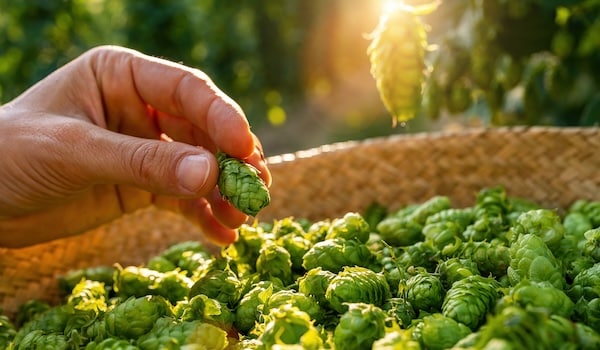

Cascade hops are the reason American craft beer exists. That’s not hyperbole — when Sierra Nevada Brewing released their Pale Ale in 1980 using Cascade as the primary hop, it introduced an entire generation of American drinkers to what beer could taste like outside of a mass-market lager. The grapefruit-and-pine character of Cascade became the signature of the American pale ale style and the template for everything that followed.
Decades later, Cascade is still one of the most widely grown hops in the Pacific Northwest and one of the most widely used in craft brewing. It’s been somewhat overshadowed by newer, flashier varieties — Citra, Mosaic, Galaxy — but it remains the OG. If you want to understand American craft beer, you start here.
What Are Cascade Hops?
Cascade was developed at Oregon State University and released by the USDA in 1972 — the first commercially available American hop variety bred specifically for the American market. Its parentage includes Fuggle (English) and a Russian variety called Serebrianker, crossed with an open-pollinated Fuggle. What came out was something distinctly American: bold citrus and floral character that European noble hops don’t have, with alpha acids high enough to do real bittering work.
For the first decade or so after its release, Cascade was mostly ignored. The big commercial breweries of the 1970s weren’t interested in hop-forward beers. It was the early craft brewers — Sierra Nevada, Anchor, a handful of others — who recognized what it could do, and the rest is brewing history.
Today it’s grown across the Pacific Northwest, with the largest concentrations in the Yakima Valley (Washington) and Willamette Valley (Oregon). It’s widely available, affordable compared to proprietary varieties like Citra, and still performs as well as it ever did.
Cascade Hop Flavor and Aroma Profile
Cascade’s signature is grapefruit — specifically, that pithy, slightly bitter grapefruit note that you associate with a classic American pale ale or West Coast IPA. But there’s more to it than that. Floral character comes through strongly, almost like citrus blossom or fresh flowers. There’s a light spiciness underneath, and when Cascade is used heavily or dry hopped, a resinous pine note emerges alongside the citrus.
Compared to modern varieties like Citra, Cascade is less intensely tropical and more citrus-resinous. It’s not going to give you mango and passionfruit — that’s not what it does. What it does is deliver a clean, recognizable American hop character that’s been the benchmark for pale ales and West Coast IPAs for over forty years.
In terms of bitterness, Cascade produces a firm, assertive bite with moderate cohumulone — not as smooth as some newer varieties, but not harsh either. It’s a well-balanced bittering addition and one of the better dual-purpose hops for recipes where you want consistent character throughout the brew.
Cascade Hops Brewing Stats
| Stat | Value |
|---|---|
| Alpha Acids | 4.5–8.9% |
| Beta Acids | 4.5–7% |
| Total Oil Content | 0.7–1.4 mL/100g |
| Myrcene | 45–60% of total oil |
| Linalool | 0.5–1% |
| Cohumulone | 33–40% of alpha acids |
| Origin | USA (Oregon / Washington) |
| Type | Dual-purpose |
Cascade has a wide alpha acid range (4.5–8.9%), which means year-to-year variation is worth accounting for when calculating IBUs. The cohumulone percentage (33–40%) is higher than some newer American varieties, which gives it a slightly sharper bitterness — distinctive and appropriate for the styles it works best in.
Best Beer Styles for Cascade Hops
- American Pale Ale — Cascade’s home territory. It defines the style. The grapefruit-floral character is exactly what you want in a well-made pale ale, whether as a bittering addition, late addition, or dry hop.
- West Coast IPA — Often paired with Centennial or Chinook for bittering, then Cascade for aroma and late additions. The combination of grapefruit (Cascade) and pine (Chinook/Centennial) is the classic West Coast IPA flavor.
- American Amber Ale — Cascade works beautifully against toasty, caramel malt — the citrus cuts through the sweetness and keeps the beer from getting cloying.
- Session IPA — Its moderate alpha acids and pronounced aroma make it a natural for lower-ABV IPAs where you want hop presence without the booze.
- American Wheat Beer — A light hand of Cascade as a late addition adds brightness to a wheat beer without overwhelming the softer malt character.
Top Commercial Beers Brewed With Cascade Hops
- Sierra Nevada Pale Ale — Sierra Nevada Brewing (California) — The GOAT pale ale. The beer that made Cascade famous and convinced a generation of Americans that beer could be hoppy. If you’ve never had it, fix that immediately.
- Anchor Steam Beer — Anchor Brewing (California) — One of the early adopters of Cascade. A unique California Common style that uses Cascade for its characteristic spicy, citrusy hop note.
- Odell Brewing Easy Street Wheat — Odell Brewing (Colorado) — A lighter application of Cascade in a wheat beer. Bright, refreshing, and a great example of the hop in a less aggressive context.
- Deschutes Mirror Pond Pale Ale — Deschutes Brewery (Oregon) — A Pacific Northwest pale ale built around Cascade. Clean, well-balanced, and a regional classic.
How to Brew With Cascade Hops
Cascade is one of the most beginner-friendly hops to work with, partly because it’s been so thoroughly documented by homebrewers over the years. Here’s how to get the most out of it.
As a bittering hop: Cascade works at 60-minute additions, though the higher cohumulone percentage means the bitterness can be a touch sharp at very high quantities. For a well-balanced pale ale, a bittering charge of 1 oz per 5 gallons at 60 minutes alongside a late addition of 0.5–1 oz at flameout is a reliable starting point.
As an aroma hop (late additions): Add Cascade at flameout or as a whirlpool addition. At these late additions, the grapefruit and floral character really opens up. A 1 oz flameout addition in a pale ale gives you a noticeably hoppy beer without crossing into IPA territory.
Dry hopping: 0.5–1.5 oz per 5-gallon batch during or after fermentation. Cascade doesn’t push as hard as Citra when dry hopped, which makes it ideal for pale ales where you want hop aroma without the beer becoming all about the hops. Contact time of 3–5 days is standard. For more on technique, see our guide to dry hopping and double dry hopping.
Classic combinations: Cascade + Centennial is the American pale ale duo. Cascade + Chinook gives you grapefruit and pine — the classic West Coast IPA pairing. Cascade + Amarillo adds tangerine alongside the grapefruit for a brighter, citrus-forward profile. For the full picture on how hop varieties interact, our types of hops guide covers every flavor family.
Cascade Hop Substitutes
- Centennial — The closest substitute. Higher alpha acids, slightly more intense citrus and pine. Often called “Super Cascade.” Use a little less.
- Amarillo — More orange and tangerine, less grapefruit. A reasonable substitute in pale ales when you want citrus without the resin.
- Citra — Much more tropical and intense. Not a like-for-like substitute, but works if you want to push the fruit further.
- Columbus (CTZ) — More resinous and earthy, less citrus. Works as a bittering substitute but the aroma profile is quite different.
Cascade Hops FAQ
What do Cascade hops taste like?
Cascade hops have a distinctive grapefruit and floral character with a light pine/resin note. They’re the defining aroma of the American pale ale style. Less intensely tropical than Citra or Mosaic, Cascade has a more classic citrus-floral profile that’s been the backbone of American craft beer for over forty years.
What beers are made with Cascade hops?
The most famous beer made with Cascade hops is Sierra Nevada Pale Ale, which helped launch the American craft beer movement in 1980. Other notable examples include Anchor Steam Beer, Deschutes Mirror Pond Pale Ale, and countless American pale ales and West Coast IPAs across the country. Cascade is one of the most widely used hops in US craft brewing.
Are Cascade hops the same as Centennial hops?
No, but they’re closely related. Centennial is sometimes called “Super Cascade” because it has a similar citrus-floral character but with higher alpha acids (9–11.5% vs. 4.5–8.9%) and a slightly more intense aroma. They’re often used together in American pale ales and IPAs, and Centennial is the most common Cascade substitute.
When were Cascade hops developed?
Cascade hops were developed at Oregon State University and released by the USDA in 1972, making them the first commercially available American-bred hop variety. They gained widespread recognition in 1980 when Sierra Nevada Brewing used them in their now-iconic Pale Ale, which helped define the American craft beer movement.
What are the best substitutes for Cascade hops?
The best substitute for Cascade hops is Centennial — similar citrus-floral character with higher alpha acids, often called “Super Cascade.” Amarillo is a good alternative for the citrus character (more orange-tangerine, less grapefruit). Citra works if you want to push tropical fruit further, but the flavor profile is quite different.
Join the Craft Beer Me Community
Whether you’re a pale ale purist or chasing the latest hop-forward releases, come find your people in the Craft Beer Me Facebook group. We talk hops, styles, homebrewing, and everything in between. And sign up for the Craft Beer Me newsletter below for more variety guides, recipe ideas, and brewery recommendations.