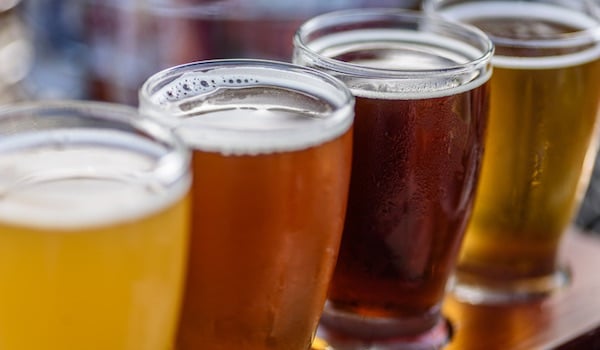

California Common — also called steam beer — is a uniquely American hybrid lager beer fermented at ale temperatures, producing a beer with the clean malt character of a lager and the fruity complexity of an ale. It’s amber in color, firm in bitterness, with woody, herbal hop notes and a crisp finish. ABV typically runs 4.5–5.5%. It’s the only major beer style that originated in America before the craft beer era, and it’s genuinely unlike anything else in the glass.
California Common exists because of a practical problem. When brewers arrived in San Francisco during the Gold Rush of the mid-1800s, they brought lager-brewing knowledge but faced a significant obstacle: no refrigeration. Lager yeast works best at cold temperatures, but San Francisco’s winters weren’t cold enough for traditional lagering. The solution was to ferment lager yeast at warmer temperatures — somewhere between where ales and lagers typically ferment — in wide, shallow open-air vessels called coolships.
The result was a beer that didn’t exist anywhere else in the world. And it became enormously popular in California before eventually fading into obscurity. Anchor Brewing brought it back from the dead in the 1970s and turned it into one of the most important beers in American craft history.
Why Is It Called Steam Beer?
The “steam” name has a few competing origin stories, none of them definitively proven.
The most popular theory involves the open-air fermenting vessels. When wort was transferred to the shallow coolships on rooftops or high above the street — where the cool San Francisco fog would chill it — steam rose from the warm liquid meeting cold air. Passersby could see the steam, and the name stuck.
Another theory involves the high carbonation. California Common is naturally quite carbonated from fermentation, and when kegs were tapped, they released a burst of pressurized gas — “steam” — that was unusual and distinctive. A third theory suggests the name comes from the high pressure in conditioning tanks.
Regardless of origin, “steam beer” was widely used throughout the late 1800s and early 1900s. The name was nearly lost entirely until Anchor Brewing trademarked “Steam Beer” as a brand name for their version. That’s why BJCP categorizes the style as California Common — the generic style name — rather than steam beer, which is now a registered trademark. If you see “California Common” on a tap handle at a craft brewery, you’re looking at a steam beer that can’t legally call itself that.
What Does California Common Taste Like?
The flavor sits in a genuinely interesting middle ground between lager and ale. The malt base is amber and toasty — similar to a Vienna lager — with a clean backbone and a touch of caramel. But the slightly elevated fermentation temperature lets the lager yeast produce a faint fruitiness that you wouldn’t get in a cold-conditioned lager. It’s subtle — not the banana or clove of a hefeweizen — but it adds a complexity that standard lagers don’t have.
The hops are the other distinctive element. Northern Brewer hops — a variety specifically associated with the style — have a woody, minty, herbal character that’s quite different from the citrus and tropical fruit of modern American craft hops. IBUs run 35–45, which gives the beer a firm, memorable bitterness without aggression. It’s a style that respects hops without being a hop bomb.
Color is medium amber to copper (10–14 SRM). Carbonation is moderate to high. The finish is clean and reasonably dry despite the malt presence. Overall, it’s a very balanced beer — interesting enough to reward attention, but easy enough to drink a few without thinking too hard about it.
Anchor Steam and the American Craft Beer Revival
The California Common’s survival is almost entirely due to one brewery: Anchor Brewing in San Francisco. Fritz Maytag purchased Anchor in 1965 when it was on the verge of closing — a tiny, run-down brewery producing inconsistent beer with outdated equipment. Over the next decade, he rebuilt the brewery from the ground up and revived the California Common style as Anchor Steam Beer.
Anchor Steam, relaunched in 1971, is widely considered the starting gun of American craft beer. It was one of the first American beers to demonstrate that there was a market for flavorful, craft-made alternatives to mass-market lagers. It inspired a generation of brewers — Ken Grossman at Sierra Nevada, Jack McAuliffe at New Albion, and countless others — to believe that an alternative to the beer monoculture was possible.
Anchor Brewing sadly went out of business in 2023 — a devastating loss for American beer history. But the California Common style lives on through dozens of craft breweries who now make their own versions, and Anchor Steam Beer itself may yet be revived under new ownership.
The Best California Commons to Try
Anchor Steam Beer (San Francisco) — the original and still the benchmark, even with Anchor’s recent closure creating uncertainty about availability. If you can find a fresh bottle or can, drink it. It’s an important piece of American brewing history with genuinely excellent flavor.
Flying Dog Old Scratch Amber Lager (Maryland) — a California Common-adjacent amber lager that captures the hybrid quality of the style. Widely distributed and consistently well-made. A good option when California-specific versions aren’t available.
Steamworks Steam Engine Lager (British Columbia) — Canada’s take on the style from one of Vancouver’s most respected craft breweries. Clean, balanced, and true to the California Common character. Worth seeking out if you’re in the Pacific Northwest.
21st Amendment Down to Earth Session IPA — not a traditional California Common, but 21st Amendment (one of San Francisco’s leading craft breweries post-Anchor) carries the Bay Area craft torch. Their year-round lineup carries the spirit of what California brewing has always been about.
Local craft versions — California Common is a style many craft breweries produce seasonally or as a historical tribute. Check your local tap list, particularly at breweries with an interest in American brewing history or traditional lager techniques.
Frequently Asked Questions
Is California Common a lager or an ale?
California Common is technically a lager — it uses lager yeast — but it’s fermented at warmer ale temperatures rather than the cold temperatures used for traditional lagers. This produces a beer with some ale characteristics (slight fruitiness, more complexity) alongside the cleanliness of lager fermentation. It’s classified as a hybrid style and is genuinely unique in the beer world.
What is the difference between California Common and steam beer?
They’re the same style. “Steam beer” is the historical name; “California Common” is the BJCP style name used because Anchor Brewing has trademarked “Steam Beer” as a brand name for their specific product. Any craft brewery making the style has to call it California Common rather than steam beer for legal reasons. The beer itself is identical.
Why did California Common beer use warm fermentation?
California Common originated during the Gold Rush when San Francisco brewers had lager yeast but no refrigeration for cold fermentation. They fermented in wide, shallow open vessels (coolships) exposed to San Francisco’s cool foggy air — warm enough for the yeast to work, cooler than typical ale fermentation. The practical constraint produced a unique style that became a California tradition.
What hops are used in California Common?
Northern Brewer hops are the traditional and defining hop variety for California Common. They have a distinctive woody, herbal, and slightly minty character very different from the citrusy American craft hops used in IPAs. The firm bitterness (35–45 IBUs) and herbal aroma from Northern Brewer is one of the style’s most recognizable characteristics.
Join the Craft Beer Me Community
Want to explore more of American beer history and great lager styles? Sign up for the Craft Beer Me newsletter for weekly guides. Join the community here.