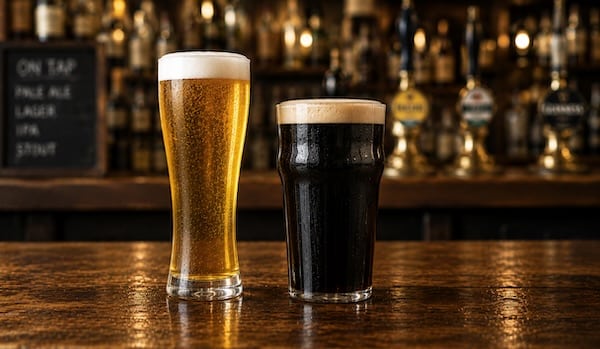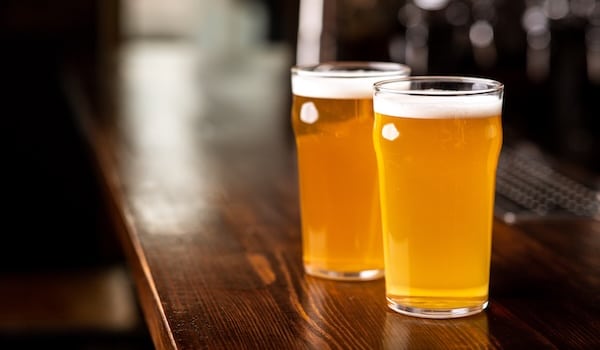
Stout vs porter is one of beer’s most genuinely confusing comparisons — not because the styles are identical, but because they share the same history, the same color range, and for most of their existence, the same name. The short version: Porter came first, stout grew out of it, and the two styles have been blurring into each other ever since. Today, the clearest difference is that stouts use unmalted roasted barley, which gives them a sharper, more coffee-like bitterness, while porters rely on roasted malted barley for a smoother, slightly sweeter dark character.
But that’s not the whole story. Both styles have expanded so much over the last few decades that you’ll find porters darker than some stouts, and stouts lighter than many porters. The lines are genuinely blurry — and understanding why makes both styles more interesting to drink.

Stout vs Porter: At a Glance
| Stout | Porter | |
|---|---|---|
| Origin | Britain / Ireland (evolved from porter) | London, early 1700s |
| Key grain | Unmalted roasted barley | Roasted malted barley |
| Color | Near black to black | Dark brown to near black |
| Flavor | Coffee, bitter dark chocolate, dry finish | Dark chocolate, caramel, slightly sweeter |
| Body | Medium to full | Medium |
| Bitterness | Medium-high (roast-driven) | Medium (roast + hop) |
| Typical ABV | 4–8% (dry stout 4–5%) | 4–6.5% |
| Key examples | Guinness, Left Hand Milk Stout | Fuller’s London Porter, Deschutes Black Butte |
A Shared History: How Stout Grew Out of Porter
Porter was London’s dominant beer style from the early 1700s through most of the 18th century. It was a dark, robust ale built for scale — cheap to produce, consistent, and satisfying enough to sustain London’s enormous manual workforce. The name almost certainly comes from the street porters and market workers who drank it in bulk.
Stout — originally called “stout porter” — was just a stronger version of the same beer. Breweries that made both used “stout” to denote the higher-gravity, more robust offering in their range. Over time, the word “porter” dropped off, and stout became its own category. The two styles then diverged in character as different ingredients and techniques developed on each side.
The critical split came with the introduction of unmalted roasted barley in Irish stout production. Roasting raw barley — rather than malted barley — produces a sharper, drier, more intensely coffee-like character. That’s the defining flavor of Guinness and most dry Irish stouts. Porter kept using roasted malted barley, which produces a smoother, more rounded dark character with less of the sharp roast bitterness.
The Real Difference: Roasted Barley vs Roasted Malt
This is the technical heart of the stout vs porter debate, and it’s worth understanding even if you’re not a homebrewer.
Roasted barley (used in stout) is an unmalted grain that’s been roasted until nearly black. Because it hasn’t been malted, it retains a harsher, more intensely bitter character — think espresso rather than drip coffee. It contributes the near-black color, the sharp dry finish, and the distinctive roasty bitterness that defines Irish dry stout.
Roasted malted barley / chocolate malt (used in porter) has gone through the malting process before roasting. Malting converts some of the starches and modifies the grain’s structure, which softens the roast character considerably. The result is dark chocolate, dried fruit, and a slight sweetness rather than sharp coffee bitterness. A well-made porter is richer and smoother than a dry stout at the same ABV.
Our guide to beer ingredients goes deeper on how different malts and grains contribute to flavor if you want to understand the full picture.
Types of Stout vs Types of Porter
Both styles have expanded well beyond their origins. Here’s a quick map of where each one goes:
Stout Varieties
- Irish Dry Stout — The Guinness archetype. Low ABV (4–5%), bone dry, roasty, and bitter. Very sessionable.
- Milk Stout (Sweet Stout) — Brewed with lactose (milk sugar), which yeast can’t ferment, leaving behind noticeable sweetness. Left Hand Milk Stout is the benchmark. Creamier and more approachable than dry stout.
- Oatmeal Stout — Oats added to the mash give a silky, fuller body and softer mouthfeel. Samuel Smith’s Oatmeal Stout is the classic. Smoother than Irish dry stout, less sweet than milk stout.
- Imperial Stout — The boozy end of the spectrum: 8–14% ABV, huge dark fruit and toffee complexity, often barrel-aged. Founders KBS, Goose Island Bourbon County — these are sipping beers, not session pints.
Porter Varieties
- English Porter — The original. Dark brown, moderate ABV (4–5.4%), with dark chocolate, toffee, and subtle roast. Fuller’s London Porter is the standard-setter.
- American Porter — More hop-forward than the English version, with the roast character still present but balanced against bitterness. Deschutes Black Butte Porter is probably the most widely available example in the US.
- Baltic Porter — A lager-fermented dark beer (technically not an ale) with higher ABV (6.5–9.5%), rich and warming. More like a doppelbock than an English porter in character.
- Robust Porter — Bigger and hoppier than a standard English porter, with more roast bitterness and higher ABV. Sits close to the stout territory in terms of intensity.
For a full breakdown of the porter side of things, our dedicated guide to porter beer covers the history and best examples in detail.
Which Is Better — Stout or Porter?
Neither. They serve different moments.
If you want something dry, roasty, and slightly bitter — something that works with oysters, a full Irish breakfast, or just a cold evening — go stout. The dryness and roast bitterness are what make it so satisfying as a food beer or a slow sipper.
If you want something slightly sweeter, more chocolatey, and a touch smoother — a better dessert beer, or something that appeals to drinkers not totally sold on bitter — go, porter. It’s the more approachable of the two for most people new to dark beer.
Beer nerds will tell you the distinction has basically collapsed at this point. They’re not wrong. But if you’re choosing a first dark ale beer for someone who’s nervous about it, start with a porter. If they want to go further, hand them a stout.
Best Stouts and Porters to Try
- Guinness Draught (Stout) — The OG. Available everywhere, best on nitro draft. If you haven’t tried it properly on tap, that’s your homework.
- Left Hand Milk Stout Nitro (Stout) — Colorado’s answer to Guinness. Silky, lightly sweet, with dark chocolate and a genuinely beautiful nitro pour. Excellent entry point into stout.
- Samuel Smith’s Oatmeal Stout (Stout) — Rich, silky, and complex without being heavy. Widely available in the US. One of the most food-friendly stouts around.
- Fuller’s London Porter (Porter) — The definitive English porter. Dark chocolate, espresso, and dried fruit with a long, satisfying finish. Pick this up at any decent bottle shop.
- Deschutes Black Butte Porter (Porter) — Oregon’s classic. Smooth, chocolate-forward, with a clean finish that makes it dangerously easy to drink. One of the best-selling craft dark beers in the US.
- Founders Porter (Porter) — Rich, roasty, and slightly hoppier than the English versions. A great American take on the style that shows what US craft brewers do with tradition.
Stout vs Porter FAQ
Is stout stronger than porter?
Not necessarily. A standard Irish dry stout sits around 4–5% ABV — similar to most English porters. Where stout pulls ahead is at the imperial end: imperial stouts regularly hit 8–14%, while imperial porters typically max out around 9–10%. For standard commercial examples, ABV is roughly comparable.
Is Guinness a stout or a porter?
Guinness is a stout — specifically an Irish dry stout. It was originally called “Guinness Extra Stout Porter” in the 18th century, which tells you everything about how blurry the line was historically. Today it’s firmly in the stout category, defined by its use of unmalted roasted barley and its characteristic dry, coffee-bitter finish.
Which is sweeter — stout or porter?
Porter is generally sweeter than dry stout. The roasted malted barley in porter produces a smoother, more chocolatey character with less of the sharp roast bitterness you get from unmalted roasted barley in stout. Milk stouts are the exception — their lactose sugar makes them sweeter than most porters. Oatmeal stouts also lean slightly sweeter and softer than Irish dry stout.
Can you substitute stout for porter in cooking?
Yes, and vice versa. Both work well in beef stews, braised meats, chocolate cakes, and barbecue sauces. The difference in the finished dish will be subtle — stout adds a slightly sharper, more bitter edge, while porter adds a smoother, more chocolatey depth. Either works. If the recipe calls for one and you have the other, use it without worry.
What’s the difference between a robust porter and a stout?
Very little, practically speaking. A robust porter is bigger and hoppier than a standard English porter — with more roast bitterness, higher ABV, and a more assertive character that sits right on the border with stout territory. The technical difference is still the grain: robust porters use malted roasted barley, stouts use unmalted. But at this level of intensity, most drinkers couldn’t tell them apart blind.
Join the Craft Beer Me Community
Dark beer fan? You’ll fit right in — come join the Craft Beer Me Facebook group where aficionados debate styles, share what’s in the glass, and make the case for their favorite dark ales. Sign up for the Craft Beer Me newsletter at the bottom of the page for more guides, picks, and homebrew recipes.
Sign Up for Our Newsletter