
Some links in this article are affiliate links. If you buy through them, we may earn a small commission at no extra cost to you. We only recommend products we’d genuinely put in our own fridge.
Non-alcoholic beer is beer brewed with little to no alcohol — typically 0.5% ABV or less in the United States. It uses the same core ingredients as regular beer: water, malt, hops, and yeast. The difference is in what happens after fermentation, when the alcohol is removed using specialized processes — or in the case of the best producers, engineered out of the brewing process entirely.
Ten years ago, recommending a non-alcoholic beer with a straight face was difficult. The category was full of thin, sweet, vaguely beer-flavored drinks that satisfied nobody who actually cared about what they were drinking. That’s changed — dramatically. Today, the best NA beers genuinely taste like beer, and a few of them taste like genuinely great beer. The category has gone from an afterthought to one of the fastest-growing segments in the drinks industry — Brewers Association data shows NA volume sales up 111% since 2021.
This guide covers everything worth knowing: how non-alcoholic beer is made, what separates the good from the forgettable, the best brands and styles available right now, and how the whole category compares to low-alcohol alternatives. Whether you’re sober-curious, training for something, or just want a beer that doesn’t slow you down — you’ve arrived at the right moment to be exploring this.
What Makes a Beer “Non-Alcoholic”?
In the United States, any beer with 0.5% ABV or less can legally be labelled “non-alcoholic.” That’s a threshold worth understanding — it means some NA beers do contain trace alcohol, just not enough to register as meaningful. For context, ripe bananas and orange juice both naturally contain around 0.4% ABV. You’re not going to feel anything at 0.5%.
The “0.0” branding you see on Heineken and Guinness is a marketing claim as much as a technical one — both brands target true zero or as close to it as measurable. Other beers, including many craft NA options, sit right at that 0.5% line. The difference in practice is negligible for most people, but worth knowing if you’re avoiding alcohol entirely for medical or religious reasons.
“Low-alcohol beer” is a different category — typically 0.5–2.8% ABV. These beers are easier to brew well (because fermentation can run longer and develop more flavor) but they’re not the same as an NA beer. More on that distinction later.
How Non-Alcoholic Beer Is Made
This is where a lot of the flavor story lives — because the production method determines how close the finished beer gets to tasting like the real thing. There are four main approaches, and they’re not all equal.
Vacuum Distillation (Thermal Dealcoholization)
The most widely used industrial method. The beer is brewed normally and then heated under reduced pressure, which lowers alcohol’s boiling point to around 40°C instead of 78°C. That lower temperature preserves more flavor compounds than traditional distillation, but you’re still applying heat to finished beer — and heat damages hop aroma. The result is often a slightly cooked, flat-tasting product. Most cheap supermarket NA beers are made this way.
Reverse Osmosis
Reverse osmosis forces the beer through a fine membrane that holds back the large flavor molecules and lets the smaller alcohol and water molecules through. The alcohol is then evaporated off, and the concentrated flavor is blended back with the water. It’s gentler on the beer than thermal methods and produces better flavor retention — some of the more impressive craft NA beers use this process. Still not perfect, but significantly better.
Arrested Fermentation
Here, fermentation is stopped early — by chilling the beer, removing yeast, or limiting fermentable sugars — before significant alcohol builds up. The problem is that fermentation is also where most of a beer’s flavor complexity develops. Stop it early and you get a simpler, often sweeter beer. The upside is no heat damage. It works reasonably well for lighter styles, but you’ll notice the simplicity in anything more ambitious.
Brewing for Non-Alcoholic from the Start
This is what Athletic Brewing does — and it’s why they consistently produce the best-tasting NA beers on the market. Instead of making a regular beer and stripping the alcohol, they’ve engineered a proprietary fermentation process that develops flavor complexity without producing significant alcohol. The yeast works, the malt develops, the hops are added — but the fermentation pathway is directed away from alcohol production. It’s fundamentally different from dealcoholization, and the results prove it.
Spinning cone columns — used by some premium producers — separate volatile aroma compounds from alcohol using centrifugal force under vacuum, then recombine the aromas with the dealcoholized beer. Expensive, technically complex, and capable of excellent results. You’ll find this approach at the high end of the market.
Does Non-Alcoholic Beer Actually Taste Good?
The honest answer: some of it does, and some of it still doesn’t. The range of quality is enormous — wider than almost any other category in beer.
The bad stuff tastes like beer-flavored water. Thin body, cloying residual sweetness (because the sugars that would have become alcohol are still there), flat aroma, and a finish that disappears instantly. This is most of the supermarket-shelf NA beer that’s been around for decades. Avoid it.
The good stuff — the Athletic Brewing beers, Guinness 0.0, Erdinger Alkoholfrei, Weihenstephaner Alkoholfrei, Mikkeller’s NA range — genuinely tastes like beer. Not identical to the full-alcohol version in every case, but satisfying in their own right, with real hop aroma, malt character, and a finish that makes sense. The body is sometimes slightly thinner than you’d expect, but it’s not a dealbreaker.
The gap between average and good has closed significantly in the last five years. If you tried NA beer a decade ago and wrote it off, try it again. You’ll be surprised.
The Best Non-Alcoholic Beer Brands Right Now
Athletic Brewing Co. (USA)
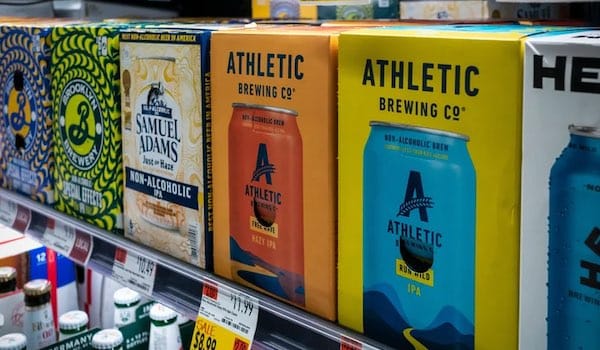
The clear leader in American NA craft beer, full stop. Founded in 2017 in Stratford, Connecticut, Athletic Brewing built its entire brewery around making non-alcoholic beer — not as a sideline, but as the whole point. That focus shows in every can.
Run Wild IPA is their flagship — a proper West Coast-ish IPA with genuine hop aroma (citrus, pine, a little resin), clean malt backbone, and a dry finish. It’s the NA beer that’s converted the most skeptics. Upside Dawn is their golden ale: lighter, crisper, easier to drink, and a good starting point for anyone new to the brand. Free Wave Hazy IPA brings the tropical, juicy character of a NEIPA to the NA space with real success. And All Out Extra Dark is a dark ale that actually tastes like one — toasty, chocolatey, and full-bodied enough to hold its own. Athletic’s range keeps expanding, and the quality across it is consistently high. Check out the Athletic Brewing Range here.
Heineken 0.0
Heineken 0.0 is the NA beer that brought the category to mass awareness — launched in 2017, it’s now one of the best-selling beers in the world, full stop, not just in the NA category. For a pale lager, it’s genuinely well-made: that distinctive Heineken malt-forward sweetness is there, the bitterness is mild and clean, and the finish is crisper than most comparable products. It’s not trying to be something it isn’t — it’s an easy-drinking NA lager, and it does that exceptionally well. The most accessible entry point into the category for most people.
Guinness 0.0
Guinness 0.0 is a technical achievement as much as it is a beer. Replicating the creamy, nitrogen-poured character of Guinness Draught without any alcohol should not be possible — and yet here it is. The roasty coffee and dark chocolate notes are all there. The texture from nitrogenation holds up. The finish is dry and satisfying. It’s not a perfect replica, but it’s close enough that you’ll do a double-take. Launched in 2021 after years of development (and a quietly recalled earlier version), it’s become one of the most impressive NA releases of the decade. Check out our review of Guinness 0.0 here.
Erdinger Alkoholfrei and Weihenstephaner Alkoholfrei
Germany has been making NA wheat beer longer than most countries have taken the category seriously. Erdinger Alkoholfrei is a proper Hefeweizen in everything except ABV — the banana and clove character from the yeast is genuinely there, the wheat body is full and fluffy, and it’s refreshing in the way that only a Hefeweizen can be. Weihenstephaner Alkoholfrei is brewed at the world’s oldest brewery and shares the same quality level. If you like wheat beer, these are some of the best NA options on the market in any style.
Brooklyn Brewery Special Effects
Brooklyn’s NA entry is a hoppy amber lager that sits in an interesting space — more flavor than a standard NA lager, but lighter in character than a full IPA. The hop aroma is genuinely pleasant: floral and citrusy, a bit earthy. The malt adds some depth that most NA lagers lack. It’s become a go-to for people who want something more interesting than Heineken 0.0 but aren’t ready for Athletic’s fully hop-forward beers.
Clausthaler (Germany)
Clausthaler is the OG — they’ve been making NA beer since 1979, long before anyone else was thinking about it seriously. The Original is a clean, malt-forward lager with a gentle hop bitterness that holds up better than most of its peers. The Amber is richer and more interesting, with caramel malt notes that give it more depth. They’re not the most exciting beers in the category, but they’re well-made and widely available. A reliable fallback when the craft options aren’t on the shelf.
Mikkeller Drink’in the Sun and Big Drop Brewing
Copenhagen’s Mikkeller has applied their craft experimentation to NA beer with impressive results. Drink’in the Sun is a hazy wheat ale with tropical fruit character — light, flavorful, and genuinely enjoyable. UK-based Big Drop Brewing is a dedicated NA specialist (like Athletic, they only make NA beer) with an impressive range: their Galactic Milk Stout is one of the most fully realized NA dark beers available, and their Pine Trail Pale Ale is excellent. Worth seeking out if you can find them.
For a more detailed roundup with ratings, the best non-alcoholic beers guide covers the full list.
Best Non-Alcoholic Beer by Style
The category has matured enough that you can now find a genuinely good NA version of almost every major beer style. Here’s where to look for each one.
Best NA IPA
Athletic Brewing Run Wild IPA is the benchmark — no other NA IPA comes close to the hop character it achieves. For a hazy / NEIPA-style experience, Athletic’s Free Wave Hazy IPA is the pick. If you want something with even more bite, Bravus Brewing’s IPA (based in Los Angeles, NA specialists) delivers genuine bitterness at 0.0% ABV. The IPA style has proven more translatable to NA than most — the big hop aroma carries a lot of the experience even without the alcohol body.
Best NA Stout
Guinness 0.0 is the obvious answer, and it earns that position. But Big Drop Galactic Milk Stout is worth tracking down — it’s a UK product with US distribution through specialty retailers, and the chocolate and coffee character is genuinely impressive for an NA beer. Athletic’s All Out Extra Dark fills the stout-adjacent gap in the US market. For context, dark styles tend to translate better to NA than lighter ones, because the roasty malt character is robust enough to come through even with a thinner body.
Best NA Wheat Beer
The Germans win this category comfortably. Erdinger Alkoholfrei and Weihenstephaner Alkoholfrei are both outstanding — authentic Hefeweizen character (the banana and clove is real, not artificial) in a properly made NA format. Mikkeller Drink’in the Sun is a looser, more tropical take on the style that’s excellent in its own right. Wheat beer’s yeast-forward character translates particularly well to the NA space, which is why the German options were ahead of the curve so early.
Best NA Lager
Heineken 0.0 is the accessible, widely-available standard. Clausthaler Original is the more understated, traditional option. For something with more hop character, Brooklyn Special Effects delivers a lager with genuine aromatic presence. Lager is the hardest style to get right in NA format — the style’s entire appeal is built on clean crispness, and the dealcoholization process can leave residual sweetness that disrupts that clean finish. The best ones manage to minimize that.
Best NA Sour Beer
The sour category is still early-stage in NA form, but improving. Athletic Brewing released a sour that’s solid. A few craft producers — including Hairless Dog in Minnesota and some of the UK NA specialists — have produced Berliner Weisse and Gose-style NA beers with genuine acidity. The tart character of sours translates reasonably well to NA because, like dark malts, the acidity provides flavor structure that doesn’t rely on alcohol to hold it up.
For the best low-calorie NA options across all styles, the low-calorie non-alcoholic beer guide breaks them down with calorie counts and flavor notes.
Non-Alcoholic vs Low-Alcohol Beer — What’s the Difference?
These two categories often get lumped together, but they’re meaningfully different.
Non-alcoholic beer (0.5% ABV or less) — the category covered throughout this guide. The focus is on replicating beer flavor with minimal alcohol. The brewing challenge is significant, which is why quality varies so widely.
Low-alcohol beer (typically 0.5–2.8% ABV) — sometimes called “session beer” or “light beer” in some markets. These beers are easier to brew well because fermentation can run far enough to develop flavor complexity, just not all the way to full strength. Beers like Kosciuszko Pale Ale (2.5%) or Modus Operandi’s Former Tenant Red IPA (2.0%) are Australian examples of this done very well. They drink more like real beer than most true NA options but aren’t suitable for anyone avoiding alcohol entirely.
Alcohol-free is a term sometimes used interchangeably with non-alcoholic, but in some countries it legally refers to a stricter threshold — 0.05% or less. In the US, “alcohol-free” isn’t a separately regulated term, so brands use it loosely. If it matters to you, read the label rather than the marketing copy.
The quick guide: if you’re avoiding alcohol for medical or religious reasons, stick to the 0.0% labeled products (Heineken 0.0, Guinness 0.0) and check individual brands. If you’re just looking for something to drink that won’t affect your night or morning, the broader 0.5% category gives you more options.
Why More People Are Reaching for NA Beer
The short answer is that the beer itself got better. Ten years ago, nobody chose NA beer because they wanted to — they chose it because they had to. Now, people are reaching for it because it’s actually good, and the range of situations where that matters is surprisingly wide.
There’s the obvious one: driving. But beyond that, there’s the long day at an outdoor event where you want to keep enjoying beer without tipping from “a few” into “too many.” There’s the early morning run the next day. There’s the work lunch where a beer sounds good but alcohol doesn’t. There’s the person who just doesn’t feel like getting drunk but still wants to sit at a bar with something interesting in front of them.
The cultural shift has been real. “Sober curious” has moved from a niche wellness concept to a mainstream conversation — and crucially, that conversation happened at the same time the quality of NA beer actually justified the interest. The timing wasn’t accidental. Athletic Brewing’s success created a market signal that the rest of the industry responded to. Now every major brewery has at least one NA offering, and a growing number of dedicated NA producers exist purely to push the quality ceiling higher.
The craft beer community has been slower to embrace NA than the broader market, for understandable reasons. But it’s getting there. If you’re a beer nerd who’s written off NA beer as something for other people — that position is harder to hold in 2026 than it was five years ago. The category deserves a fresh look. And there’s no shame in having Run Wild IPA be the last beer of the night.
For a broader look at how NA beer fits into the full landscape of beer styles, the complete beer types guide covers everything from lagers and ales to craft specialties.
Where to Buy Great Tasting Non-Alcoholic Beer
Finding quality NA beer has gotten a lot easier in the last few years — but not every bottle shop or grocery store carries the good stuff. Here’s where to look depending on what you’re after.
Online Retailers — The Best Selection, Delivered to Your Door
Online is where you’ll find the widest range, including brands that aren’t stocked anywhere near you. Proof No More is the standout option — a dedicated non-alcoholic bottle shop carrying a curated selection of NA beers, wines, and spirits from the best producers worldwide. If you’re serious about exploring the category, it’s the single best place to shop. Athletic Brewing ships direct from their website too, and their subscription options are genuinely good value if you’re going through Run Wild at any speed. For same-day or next-day delivery in most cities, Drizly and Instacart now carry a solid range of NA beer from local retailers, including Heineken 0.0, Guinness 0.0, and Brooklyn Special Effects. Amazon stocks some NA options but the selection is patchy — it’s not the first place to look.
A good independent bottle shop is your best in-person option. As the NA category has grown, most craft-focused retailers have built out dedicated NA sections — and the staff actually know what they’re recommending. If your local bottle shop doesn’t carry Athletic Brewing yet, ask them. Most are happy to order it in. Total Wine & More has the most consistent NA section of any national chain — the range varies by location but is generally solid. BevMo carries Athletic, Heineken 0.0, and Clausthaler in most stores.
Grocery Stores and Supermarkets
Whole Foods has been ahead of the curve on NA beer — they carry Athletic Brewing across most locations, plus Erdinger Alkoholfrei and a rotating selection of craft NA options. Trader Joe’s stocks a handful of NA beers that punch above their price point. Target and Walmart carry mainstream NA options (Heineken 0.0, Guinness 0.0, Athletic Run Wild) in the majority of locations — not exciting, but convenient and well-priced. Natural Grocers and Sprouts are worth checking if you have one nearby, particularly for the German wheat beer imports.
Bars and Taprooms
NA beer on tap is still rare, but it’s becoming more common at craft-focused taprooms and cocktail bars. Athletic Brewing has been pushing hard to get their beers on draft at taprooms across the US — worth asking at your local. Increasingly, bars that take their non-alcoholic offering seriously will have two or three NA options on the menu, not just a warm Beck’s Blue from the back of the fridge. If you’re in a city with a strong craft beer scene, look for bars that specifically advertise a “mindful drinking” menu — they tend to carry the best selection.
Frequently Asked Questions
Does non-alcoholic beer actually have no alcohol?
Most non-alcoholic beers contain up to 0.5% ABV — that’s the US legal threshold for the “non-alcoholic” label. Brands like Heineken 0.0 and Guinness 0.0 target true zero or as close to it as measurable. At 0.5%, the alcohol content is comparable to what’s naturally present in some fruit juices and ripe bananas. You won’t feel any effect at that level.
What is the best non-alcoholic beer to try first?
Athletic Brewing Run Wild IPA or Heineken 0.0 are the best starting points, depending on what you normally drink. If you like hoppy craft beer, Run Wild is the one. If you prefer easy-drinking lagers, Heineken 0.0 is the most reliable and widely available option. Both are benchmarks in the category and honest representations of what the best NA beer can taste like.
Is non-alcoholic beer the same as zero alcohol beer?
The terms are often used interchangeably, but there’s a technical difference. “Non-alcoholic” legally allows up to 0.5% ABV in the US. “Zero alcohol” or “0.0” is a branding term used by products targeting true zero — like Heineken 0.0 and Guinness 0.0. In practice, both categories are negligible in terms of alcohol content, but if you need strict zero for medical or religious reasons, look for the “0.0%” label and verify with the brand.
Why does non-alcoholic beer sometimes taste sweet?
Sweetness in NA beer comes from residual sugars left behind when fermentation is stopped early or the alcohol is removed. In regular beer, those sugars are converted to alcohol by yeast — that alcohol dries the beer out and balances the sweetness. Without alcohol, the sugars remain. Better NA beers compensate by adjusting the grain bill, using enzyme treatments to reduce residual sugar, or selecting hop varieties that add bitterness to counterbalance. It’s a real technical challenge, which is why the best producers have invested so heavily in solving it.
Can you get drunk on non-alcoholic beer?
No. At 0.5% ABV or less, your body metabolizes the alcohol faster than it accumulates — you’d need to drink an unrealistic amount in a very short time to register any effect. The practical answer is that non-alcoholic beer will not get you drunk. That said, if you are in recovery from alcohol dependency, some people find that the taste and ritual of beer — even NA beer — can be a trigger. That’s a personal decision, not a physiological one.
Join the Craft Beer Me Community
NA beer is one of the most hotly debated topics in the Craft Beer Me community right now — and there are strong opinions on both sides. Come join the Craft Beer Me Facebook group and share what’s in your glass (or what you think of the NA movement). And sign up for the newsletter at the bottom of the page for the latest guides, reviews, and brewery picks delivered straight to your inbox.
Sign Up for Our Newsletter