In This Article
- Introduction to Beer Fermentation
- Understanding Fermentation in Beer Brewing
- Stages of the Beer Fermentation Process
- Key Factors That Affect the Beer Fermentation Process
- How to Monitor and Troubleshoot the Beer Fermentation Process
- How the Beer Fermentation Process Affects Flavor
- Conclusion
- Sign Up for Our Newsletter
Introduction to Beer Fermentation
When you think of beer production, you picture massive tanks, bags of grain, hops, and boiling water. But the chemical processes that make up the brewing process are where the magic happens. Fermentation is likely the most important step to reach beer.
Fermentation happens elsewhere, particularly in food pickling, but it’s most often associated with the production of alcoholic beverages. In brewing, it’s the process where yeast converts grain sugars into alcohol. So you have fermentation to thank for the nice little buzz you get from that IPA.
But how does fermentation work in brewing? There are a few methods and tricks brewers use to ferment grains in ways that make beer the truly magical beverage it is.
Understanding Fermentation in Beer Brewing
Fermentation is the chemical process in which yeast converts sugars from malt into alcohol and carbon dioxide. After a mashing process converts grains into a wort (a sugary liquid), it’s cooled and transferred to a fermentation vessel. Once there, yeast is added to initiate the fermentation period. Depending on the recipe and brewing setup, the primary phase typically lasts 1–2 weeks at controlled temperatures (temperature and yeast strain will influence final flavor).
During this time, the yeast will work its magic, consuming sugars as flavors and alcohol develop. Sometimes, a secondary fermentation may follow for clarification and conditioning. The entire process ends when fermentation activity ceases, and a finished beer is ready for bottling or kegging.
What Is Yeast Fermentation in Beer?
Yeast is the primary driver of fermentation, in that these sugars cannot be converted into alcohol any other way. Fermentable sugars (like glucose and maltose) in the wort are converted into alcohol, carbon dioxide, and various flavor compounds by a brewery’s house yeast strain or a commercial product for homebrewers. These come in liquid or dried powder form and will be pitched into the wort.
Various yeast strains also influence a beer’s flavor, aroma, and mouthfeel. The primary distinctions for yeast strains are whether they are for lagers or ales. Lager yeast cold-ferments at the bottom, and ale yeast warm-ferments at the top. There are further intricacies based on specific strains.
Key Reactions in the Brewing Fermentation Process
The essential chemical reactions resulting from yeast fermentation are the conversion of sugars into ethanol and carbon dioxide. Glycolysis is the initial chemical reaction where yeast (a type of fungus) breaks down glucose into separate molecules. Fermentation also produces byproducts like esters, phenols, and fusel alcohols, which drive flavor and aroma.
Stages of the Beer Fermentation Process
There are a few steps in how beer is fermented, and some are essential while others are optional. Here’s a rundown:
Lag Phase – The Start of Fermentation in Beer (0–24 hours)
The first step is essentially the quiet before the storm. Once the yeast is pitched into the fermentation vessel with the cooled, oxygenated wort, it doesn’t start fermenting immediately. The yeast cells take time to adapt to their new environment (temperature is an important aspect of this). Slowly, they start to absorb oxygen and nutrients from the wort and begin multiplying. During the lag phase, there’s little visible activity, and homebrewers generally use this to crack a beer or get out of the garage for a while. But crucial conditions are put in place for a healthy fermentation, and consistency is key!
Primary Beer Fermentation Process (1–7 days)
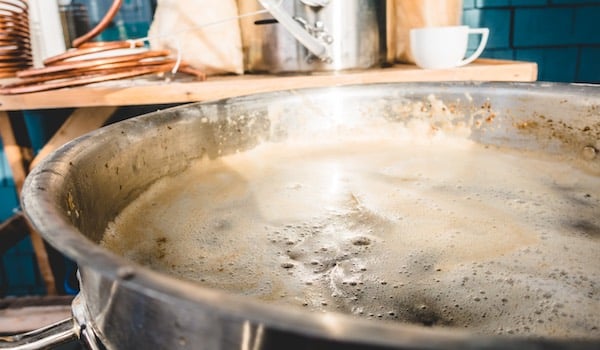
This is the most dynamic fermentation stage, as yeast begins to metabolize the wort’s sugars (mainly glucose, maltose, and maltotriose). This converts them into ethanol (alcohol), carbon dioxide, and various byproducts like esters and phenols (which are key contributors to beer’s flavor and aroma). Brewers will notice foaming (or krausen) on the beer’s surface with bubbling escaping through the airlock as CO₂ escapes. The beer’s alcohol content, along with much of its personality (character characteristics like aromas and flavor), will form during this process.
Secondary Fermentation in Beer (1–2+ weeks)
The bulk of the sugars has been consumed during primary fermentation, but some fermentation will happen as the yeast settles at the bottom of the fermenter. This stage is where off-flavors like diacetyl (buttery taste) and acetaldehyde (green apple) are reabsorbed and neutralized by the yeast. The beer will clarify as proteins and polyphenols drop out of suspension. This will probably be your favorite part… Hops are added at this stage (dry hopping) to contribute aroma without bitterness.
Optional Cold Conditioning / Lagering (Refinement | Weeks to Months)
For brewing lagers or ales like Kölsch, the beer is stored at near-freezing temperatures. This process, often called lathering, further smoothens flavors, clarifies the beer, and reduces harsh notes. Lager yeast will continue to slowly work at cold temps, cleaning up residual compounds. The result is a crisp, clean beer with refined character.
Key Factors That Affect the Beer Fermentation Process
Beer Fermentation Temperature Control
| Factor | Ale Fermentation | Lager Fermentation |
|---|---|---|
| Yeast | Top-fermenting | Bottom-fermenting |
| Temp Range | 15–24°C | 7–13°C |
| Flavor Profile | Fruity, estery | Clean, crisp |
Oxygen, Pitch Rate & Yeast Health in the Fermentation Process
Oxygen: Yeast needs oxygen to create cell membranes and reproduce during the initial “lag phase” of fermentation.
Pitch rate: This refers to the amount of yeast added to wort to start fermentation. It’s a crucial factor in achieving consistent and desirable fermentation results. It’s typically measured in cells per milliliter of wort. A good starting point is often around 1 million cells per milliliter per degree Plato of original gravity.
Yeast health: There’s a reason brewers care so much about their house yeast strains. Healthy and viable yeast leads to a smooth, flavorful fermentation with minimal off-flavors, while stressed yeast can result in a flawed beer. Brewers ensure yeast health by providing proper nutrients, oxygen, and temperature control throughout the fermentation process.
Fermentation Vessels and Airlock Use in Brewing
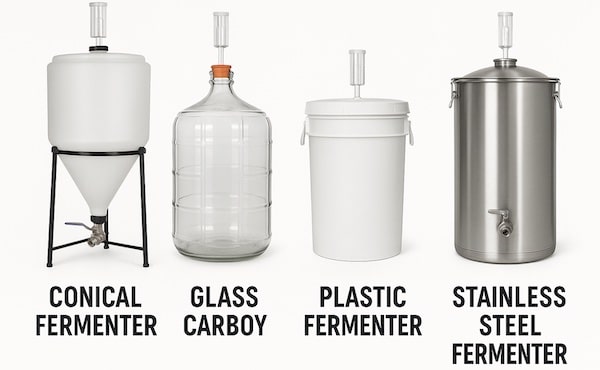
Fermentation vessels, or fermenters, are containers used to hold wort during the fermentation process. These vessels can be made of various materials like stainless steel, glass, or food-grade plastic. Conical fermenters have a conical bottom for easy yeast removal and are popular in commercial brewing. Glass Carboys are used for smaller batches or homebrew operations and offer visibility into the fermentation process. Plastic fermenters are a budget-friendly option, especially for beginners, but they need to be food-grade. Stainless steel fermenters offer durability and ease of cleaning and are utilized in commercial breweries.
Sanitization is massively important for avoiding contamination and off-flavors. Most experienced brewers will say 90% of brewing is cleaning! Airlocks are also crucial in fermentation because they allow carbon dioxide to escape while preventing oxygen and other contaminants from entering the vessel.
How to Monitor and Troubleshoot the Beer Fermentation Process
Making sure your fermentation goes smoothly from start to finish ensures beer quality.
Signs of a Healthy Fermentation in Beer
Active bubbling, krausen formation, sediment buildup, pleasant aromas, reaching target gravity, and clear beer after fermentation are all common signs that fermentation is progressing as expected.
Common Beer Fermentation Problems and Solutions
Temperature shocks, low pitch rate, poor aeration, and poor yeast health are all quite common in homebrewing operations. Beginners will want to keep an eye on these variables to make up for a lack of experience and advanced equipment.
Stuck (or slow) fermentation can happen when yeast health, temperature, nutrient availability, or oxygen levels aren’t ideal. If airlock activity stops prematurely or gravity readings remain high, this will indicate unfermented sugars.
Infection issues may arise from contamination by bacteria or wild yeast, leading to undesirable flavors and aromas such as sourness, vinegar-like notes, mold growth, or other unexpected characteristics. Strict sanitation practices are non-negotiable. Thoroughly clean and sanitize all equipment, and even consider using a no-rinse sanitizer.
Off-flavors can result from yeast stress, oxidation, or infection. Brewers should watch for diacetyl (buttery), acetaldehyde (green apple), or sulfur (rotten eggs).
How to Know When Fermentation in Beer Is Finished
Check the gravity! As fermentation progresses, yeast converts sugars into alcohol and CO2, causing the specific gravity to decrease. Brewers use a hydrometer or refractometer to measure the sugar content of the beer. Final gravity stability is a major marker. Once the specific gravity reading remains the same over several days, you’ll know the yeast has consumed most of the available sugars and fermentation is complete.
What to expect: Ales typically ferment for 1-3 weeks, while lagers require a longer fermentation time, usually 4-8 weeks.
Bottling After Fermentation – The Final Step in How Beer Is Fermented
Priming sugar is added for natural carbonation, but this also triggers a secondary fermentation. Bottle conditioning typically takes between 2 and 4 weeks to allow the yeast to consume the priming sugar and produce carbon dioxide along with flavors.
How the Beer Fermentation Process Affects Flavor
How brewers approach fermentation has monumental impacts on the final product.
Yeast Fermentation and Beer Flavor – Esters, Phenols & More
Yeast fermentation’s significant impact on beer flavor comes down to the production of esters and phenols. Esters will be familiar to most beer drinkers without them knowing the name. Isoamyl acetate (banana flavors in a saison of witbier) and ethyl acetate (pear) will be fruity and floral. Phenols like 4-vinyl guaiacol (clove) and 4-ethylphenol (barnyard) can be spicy, smoky, or funky. These compounds are directly influenced by yeast strain choice and subsequent fermentation (along with controllable variables like temperature).
Beer Styles Defined by Their Fermentation Process
Ales: Top-fermenting yeasts (Saccharomyces cerevisiae) thrive at warmer temperatures (around 15-24°C or 60-75°F). These generally have more fruity and ester-driven flavors due to the higher fermentation temperature. Pale ales, IPAs, stouts, porters, and saisons are all brewed with ale yeast.
Lagers: Bottom-fermenting yeasts (Saccharomyces pastorianus) work best at cooler temperatures (around 7-15°C or 45-59°F) and typically exhibit cleaner, crisper flavors with less yeast-derived character compared to ales. Pilsners, Märzens, Bocks, Helles, and other lagers are bottom-fermented and often go through cold conditioning processes.
Spontaneous fermentation: Wild and Belgian ales often utilize wild yeasts and bacteria (traditionally from the surrounding environment). The results are unique and often sour or tart flavors found in styles like Lambic, Gueuze, and Flanders Red Ale.
Conclusion
Fermentation is the heartbeat of brewing, shaping everything from aroma to mouthfeel to alcohol content. Whether you’re a homebrewer dialing in your process or a beer lover curious about what’s happening inside those stainless-steel tanks, understanding fermentation gives you a deeper appreciation for every pint you pour. The way yeast behaves, the temperatures you maintain, and the choices made during each stage all influence how the final beer tastes in your glass.
Let’s Talk Fermentation
If you found this guide helpful, drop a comment below — I’d love to hear what you’re brewing next. And while you’re here, don’t forget to sign up for the newsletter below, so you never miss new brewing tips, techniques, and deep dives 🍻
Sign Up for Our Newsletter